


Dallas Economic Profile 2026: Strategic Growth, Resilience, and Regional Prosperity
Dallas Economic Profile 2026: Strategic Growth, Resilience, and Regional Prosperity
The Dallas Fort Worth (DFW) metropolitan area has officially solidified its status as the primary economic powerhouse of the United States by the midpoint of 2026. Transitioning from its historical roots as an energy and manufacturing hub, the region has successfully pivoted into a diversified, technology forward landscape that now rivals, and in some critical metrics exceeds, the economic output of legacy coastal metropolitan areas. This transformation is not merely a product of organic growth, but the result of deliberate institutional strategy, massive talent acquisition, and a business climate that prioritizes efficiency and scalability.
For executives, investors, and entrepreneurs, understanding the trajectory of this market requires an exhaustive examination of the underlying forces driving its performance, from its highly favorable regulatory environment to its status as a global leader in data infrastructure. As the region matures, it is shifting from a destination for simple relocation to a permanent anchor for global corporate operations.
The Foundations of Dallas Demographics and Talent Influx
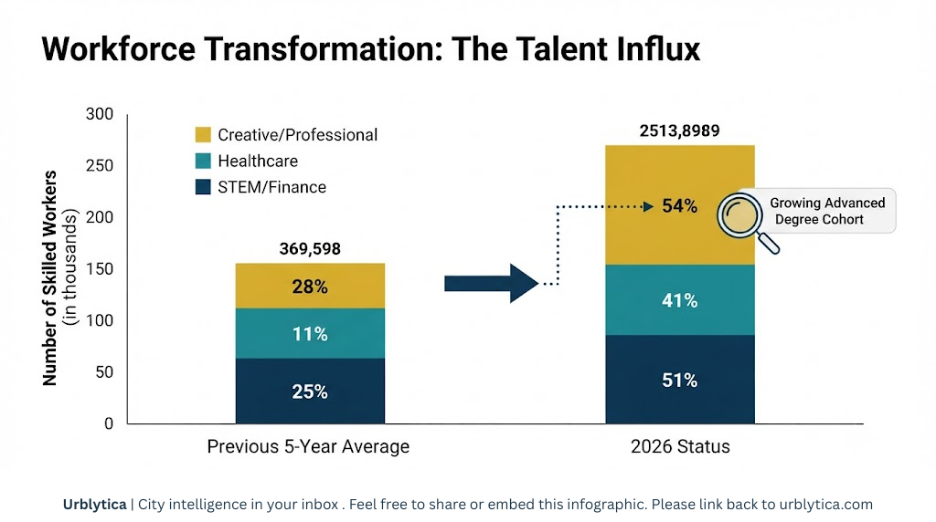
The unprecedented expansion of the North Texas region is rooted in a fundamental shift in its demographic composition. Over the past five years, the region has been the primary beneficiary of domestic migration, where professionals from across the country seeking a higher quality of life, improved affordability, and a more favorable tax environment have relocated in record numbers.
This is not just a quantitative surge; it is a qualitative shift. A significant percentage of new residents arrive with advanced professional degrees, specifically in STEM fields, finance, and healthcare. When examining the regional labor pool, we see a clear, measurable shift toward technical, executive, and creative talent. This transformation of the population base is a primary indicator of long term sustainability for businesses aiming to establish a footprint. As the region continues to attract this talent, firms looking to start a business are finding an increasingly sophisticated labor force capable of supporting highly complex corporate operations.
The demographic influx ensures that the region remains a top choice for families and businesses alike, sustaining the consumer demand that anchors the local economy. With over 8.4 million residents in the DFW metro, the scale of the local market provides a built in customer base for new ventures, significantly reducing the discovery time for businesses entering the Texas market for the first time.
Industrial Pillars and Strategic Sector Diversification
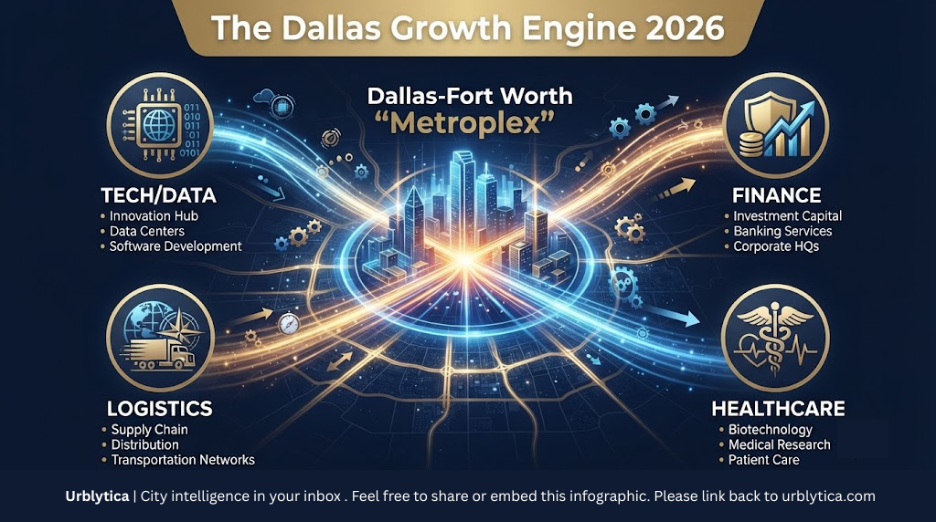
The economic vitality of the Dallas metroplex is supported by a remarkably diverse industrial base. Unlike regions reliant on a single sector which are susceptible to boom and bust cycles the local economy benefits from a healthy, interlocking mix of professional services, finance, technology, and advanced logistics.
1. The Global Leader in Data Infrastructure
In a landmark development for 2026, Dallas has officially been ranked as the number one primary data market in the world. Driven by the accelerating adoption of artificial intelligence and cloud computing, the demand for digital infrastructure has transformed North Texas into the central nervous system of the American internet. This status as a global data center hub provides a unique competitive advantage for local businesses, which now have the lowest latency and highest capacity access to the cloud infrastructure that powers modern, automated, and AI driven operations.
2. Financial Services and Corporate Headquarter Density
The finance sector remains a core, foundational pillar of the regional economy. The massive concentration of banks, regional investment firms, and corporate headquarters has created a self reinforcing feedback loop that encourages further financial services expansion. This density of capital is a prerequisite for many of the business guides that investors utilize when surveying the southern market for expansion opportunities. The stability provided by these institutions acts as a critical hedge against national economic volatility, ensuring that local credit markets remain fluid even during broader downturns.
3. Industrial and Logistics Dominance
DFW has reclaimed the nation’s top spot in industrial development. With millions of square feet currently under construction, the region has solidified its role as a national distribution hub. Major corporate relocations are not only moving jobs here but are also shifting their supply chains to be centered around the North Texas logistics network. For firms aiming to buy a business that relies on physical goods, the sheer scale of the DFW distribution network allows for unparalleled market penetration and lower overhead costs.
Comparative Economic Indicators 2026
The following table provides a breakdown of how the regional economy compares against national averages. This data is essential for assessing the relative strength of the Dallas market compared to secondary urban hubs and tier one cities.
|
Metric |
Regional Performance |
National Average |
Economic Status |
|
GDP Growth |
4.8% |
2.5% |
Superior |
|
Job Creation Rate |
3.9% |
1.8% |
Strong |
|
Median Household Income |
$95,607 |
$74,000 |
Above Avg |
|
Business Formation Rate |
5.2% |
3.1% |
Robust |
|
Industrial Vacancy Rate |
8.7% |
11.4% |
Competitive |
Navigating the Regulatory and Business Environment
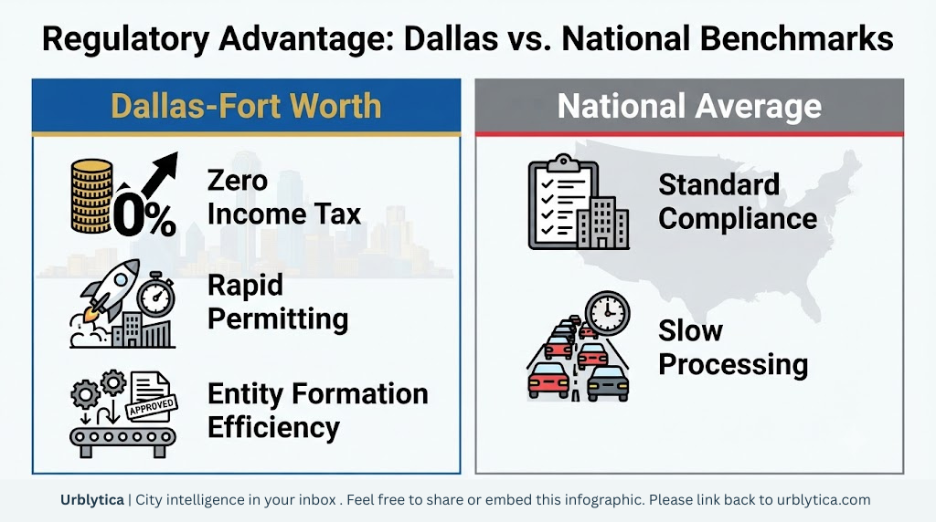
One of the defining features of the North Texas market is its intentionally business friendly regulatory climate. Entrepreneurs consistently cite the ease of compliance, the absence of state level income tax, and the speed of permit processing as major factors in their decision to relocate operations here. Performing a thorough economic analysis is often the first, and most important, step for executives planning a move to the region.
Compliance and Entity Formation
For entities looking to establish a presence, the process is streamlined to encourage rapid entry and market activation. Using professional filing services is a common strategy for firms aiming to maintain perfect standing with the Secretary of State while minimizing the time spent on administrative tasks. Engaging in proper business formation is the standard protocol for firms aiming for long term sustainability. The ease with which a firm can secure its legal status allows the executive team to focus on core revenue generating activities rather than navigating complex permit requirements. This administrative efficiency is a key reason why the city frequently tops national rankings for the best cities for business.
The Insurance and Climate Challenge
While the regulatory environment is favorable, it is not without challenges. Recent data indicates that homeowners and commercial insurance premiums have risen significantly in Texas. While this is a national trend, local business owners must account for these increased carrying costs in their operational budgets. For companies looking to expand, factor in a higher buffer for fixed operating costs compared to the 2020 2022 era.
The Care Economy: A Strategic Growth Sector
As the economy continues to evolve, the care economy's healthcare, assisted living, and elder support is emerging as a critical, inelastic pillar. In response to the aging population in the region, demand for healthcare services and specialized living facilities is expanding in tandem with a broader population.
Investors' tracking senior care statistics will notice that the demand for these services is expanding rapidly. Whether it is through companion care or more complex clinical support, the demand remains consistent, providing a significant buffer against economic downturns. This sector represents a critical, often overlooked, component of the city's economic stability. Businesses providing specialized medical or support services are finding that the local market has matured to provide world class consulting services, making it a prime sector for capital investment.
Infrastructure and Logistics: The Force Multiplier
The strategic geographic location of the Dallas region acts as a force multiplier for logistics and supply chain businesses. With access to major transit arteries, international rail lines, and one of the world's busiest aviation hubs (DFW Airport), the ability to move goods and people is essentially unparalleled in the interior United States.
Businesses that leverage these logistical advantages often see lower overheads and faster market penetration. Looking ahead, major initiatives focusing on public transit expansion, digital connectivity, and airport modernization are already underway to support future capacity. This long term commitment to infrastructure is exactly what separates a transient growth spurt from a permanent economic expansion.
Financial Performance and Operational Scalability
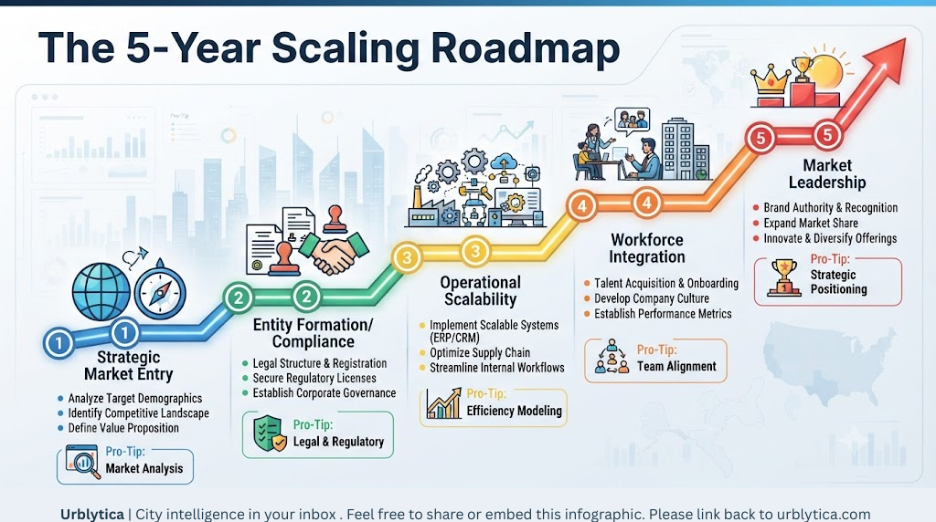
In an environment characterized by such rapid growth, financial discipline is critical. Firms often struggle when they fail to model their operational costs against the rising price of commercial real estate and talent. Utilizing a break even calculator early in the planning phase is highly recommended for any business model intended to scale within this competitive landscape.
Workforce Costs, Compensation, and Retention
The cost of labor in the region is rising, a direct result of the intense competition for top tier talent. Firms must move beyond salary alone and offer competitive benefit packages, equity, and hybrid work environments. Using a professional salary calculator helps management align their budgets with the realities of the local hiring market, preventing talent leakage from competitors.
Economic Resilience and Future Outlook
The outlook for the next several years remains highly optimistic for the region. The area is not just growing; it is maturing into a global, tier one economic hub. By maintaining a focus on sustainable development, renewable energy integration, and infrastructure improvement, the municipal leadership is effectively ensuring that the growth remains balanced and defensible against future shocks.
Strategic Market Entry Metrics: Risks vs. Opportunities
|
Strategic Area |
Opportunity Factor |
Risk Factor |
Net Impact |
|
Real Estate |
Rapid Appreciation |
High Initial Lease |
High |
|
Talent Acquisition |
Massive Pool |
Wage Pressure |
High |
|
Consumer Demand |
Growing Base |
Market Saturation |
Medium |
|
Regulatory |
Tax Incentives |
Insurance/Compliance |
Low |
The Role of Professional Services
The local demand for business services is at an all time high. Legal firms, accounting agencies, and marketing consultants are experiencing rapid growth as they assist incoming corporations with their operational setup. This professional services ecosystem is what separates a transient growth spurt from a permanent economic expansion. By providing the tools and advice necessary for long term viability, these firms ensure that new businesses are integrated into the regional economy rather than just operating within it.
Businesses requiring accounting and finances support are finding that the local market has matured to provide world class consulting services. This is essential for firms that need to manage complex tax filings and compliance obligations while maintaining rapid growth trajectories.
FAQs About the Local Economic Landscape
1. What makes the current economic climate attractive for new businesses?
The primary drivers include a zero state income tax burden, a rapidly expanding professional workforce, and a highly supportive regulatory framework for business entity formation.
2. How does population growth affect the local real estate market?
The influx of professionals has caused a surge in demand for both commercial office space and residential property, leading to steady valuation increases, particularly in the northern submarkets.
3. What industries are leading the job growth in this region?
The technology, financial services, healthcare, and logistics sectors are the primary engines currently driving the highest number of new job postings in 2026.
4. Is the region susceptible to national economic downturns?
While no region is immune, the extreme diversification of the local industrial base anchored by data centers, finance, and logistics provides a significant buffer against sector specific corrections.
5. How can I analyze if my business model succeeds here?
Conduct a comparative analysis using local market data and model your specific operational overheads using regional wage and rent benchmarks. You can find these benchmarks on the Urblytica City Intelligence Dashboard.
6. What is the role of the municipal government in this growth?
The government actively prioritizes infrastructure upgrades and streamlining the permitting process to maintain the region's competitive edge for new investment, particularly around the FIFA 2026 World Cup to host city infrastructure projects.
7. Where should a new company focus on its recruiting efforts?
Companies should leverage proximity to major regional universities (like SMU, UTD, and UNT) to tap into the steady stream of fresh, highly skilled graduates.
8. How does the cost of living compare to other tier one cities?
Despite rising costs, the local cost of living remains significantly lower than in traditional coastal hubs like San Francisco or New York, which serves as a major incentive for corporate relocation.
9. What are the key infrastructure projects that will define the next decade?
Major initiatives focusing on public transit expansion, digital connectivity, and airport modernization are already underway to support future capacity and global reach.
10. Are there specific incentives for tech startups?
Yes, various state level and city level initiatives are specifically designed to support the R&D and scaling efforts of early stage technology companies, particularly in the AI and data sectors.
Conclusion
As we look to the end of 2026, the Dallas Fort Worth metroplex stands as a testament to strategic economic planning. The transition from a traditional manufacturing hub to a diversified, tech forward, and data centric global player is complete. For businesses considering an entry into this market, the window of opportunity remains open, but it is one that requires careful planning, a clear understanding of the local regulatory landscape, and a commitment to leveraging the region's massive industrial and human capital. Whether you are a startup seeking to disrupt or a corporation looking to optimize your logistics, Dallas Fort Worth offers the infrastructure, the talent, and the stability to sustain your growth for the long term.
Put Your Brand in Front of Movers & Founders
Reach a high-intent relocation and business audience across thousands of cities. Claim your space today.
View Placement Rates →