


Austin Economic Profile 2026 - Market Trends & Analysis

Austin Economic Profile 2026 - Market Trends & Analysis
The Austin metropolitan area has officially solidified its standing as a cornerstone of the United States economy as of early 2026. The transition of this region from a midsized capital city to a global epicenter for innovation, venture capital, and advanced industrial manufacturing remains one of the most significant economic developments of the decade. This comprehensive profile provides a granular examination of the factors driving this growth, the shifts in the demographic landscape, and the strategic advantages that continue to attract capital and talent to the region.
Historical Economic Context and Structural Transformation
The story of the Austin economic landscape is one of intentional diversification and structural evolution. While the city was historically anchored by the presence of the state government and the University of Texas, the last fifteen years have witnessed a deliberate pivot toward high growth industries that define the current era. This transition has been bolstered by a regulatory framework that prioritizes ease of operations for new ventures. For those looking to understand how the city has managed this transition, regional economic analysis provides a clear picture of the fiscal strategies employed by local leadership.
The city has moved well beyond the simple startup ecosystem of the early 2010s. Today, it functions as a mature hub where established corporations operate alongside high potential ventures. This coexistence is facilitated by a robust business formation support system that minimizes the bureaucratic burden on founders.
The evolution of the city is not an accident. It is the result of years of investment in infrastructure, education, and the promotion of a business climate that encourages risk taking. For deeper city level insights, visit Urblytica’s City Intelligence Dashboard.
The Technological Renaissance and Industry Growth
The tech sector remains the primary engine of the Austin economy, yet its nature has evolved significantly. It is no longer limited to software development; it now encompasses robotics, biotechnology, and clean energy innovation. The convergence of these fields creates a unique environment where cross industry collaboration is the norm. Professionals and investors interested in how to start a business in this environment are often drawn by the sheer density of intellectual capital.
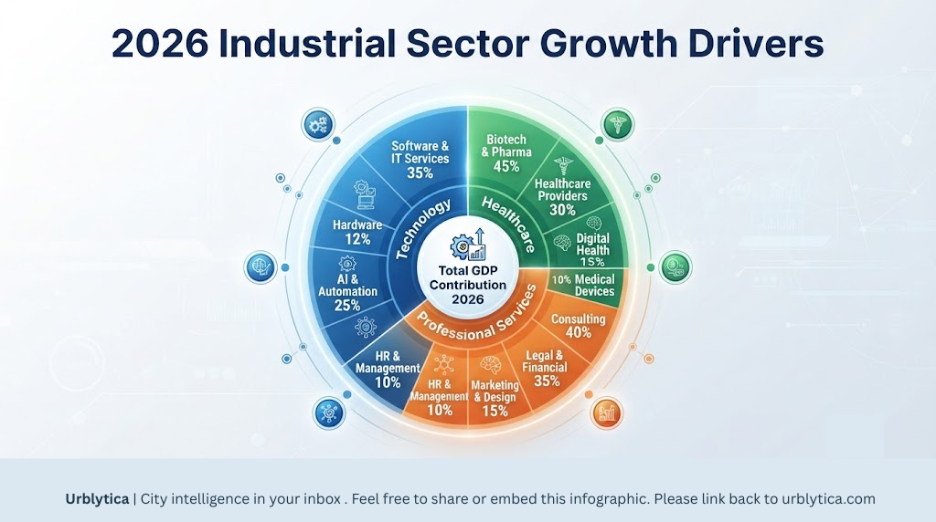
Manufacturing has also experienced a massive resurgence, though it bears little resemblance to traditional industrial models. It is now characterized by advanced logistics, supply chain precision, and precision engineering. This evolution in the business services sector ensures that the city remains resilient against the volatility often seen in pure play tech markets.
|
Industrial Sector |
Contribution to GDP (Billions) |
2026 Growth Projection |
Maturity Level |
|
Technology and Software |
18.2 |
9.1 percent |
Advanced |
|
Healthcare and Biotech |
9.4 |
11.2 percent |
Growth |
|
Professional Services |
6.2 |
7.4 percent |
Stable |
|
Advanced Manufacturing |
5.8 |
6.5 percent |
Emerging |
|
Retail and E-commerce |
5.1 |
5.8 percent |
Moderate |
Demographic Shifts and The Talent Pipeline
The demographic profile of the city is shifting rapidly. The influx of highly skilled professionals from across the country is the primary reason the region has maintained such a high velocity of growth. These individuals are not only contributing to the labor force but are also driving consumption in the local economy, fueling growth in the advertising and marketing sectors as companies vie for their attention.
When analyzing the population growth, it becomes clear that the age bracket of 25 to 44 is disproportionately represented. This group brings high educational attainment and a strong propensity for entrepreneurial risk taking. For families and professionals considering a move, using a relocation cost calculator is a standard step to gauge the financial feasibility of transitioning to the region.
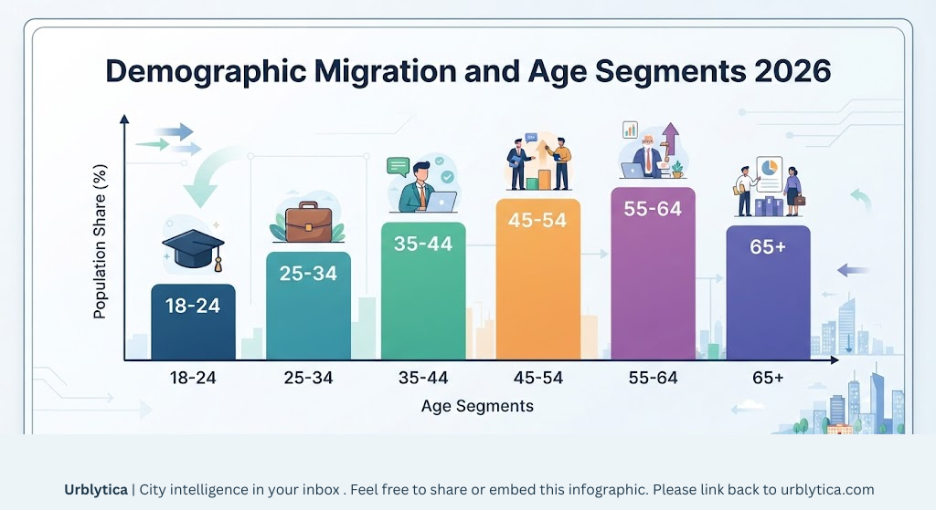
The city has successfully created a pipeline that attracts top tier talent from international hubs and domestic coastal cities, ensuring that the labor market remains competitive and highly skilled. This talent pool is the fuel that powers the ongoing expansion of the local tech and service sectors.
|
Demographic Segment |
Population Share (2026) |
Trend vs 2024 |
Primary Driver |
|
18-24 |
12.5 percent |
Decreasing |
Education |
|
25-34 |
32.2 percent |
Increasing |
Employment |
|
35-44 |
24.1 percent |
Increasing |
Family Growth |
|
45-64 |
20.8 percent |
Stable |
Professional Tenure |
|
65+ |
10.4 percent |
Slight Decline |
Retirement |
The Regulatory Environment and Business Entry
Austin is frequently cited as one of the best cities for business because of its predictable regulatory environment. The state government has invested heavily in creating a system that rewards efficiency and transparency. For those who want to buy a business or franchise within the city, the process is facilitated by a clear legal roadmap.
Many entrepreneurs fail not because of a bad idea but because of poor compliance management. The administrative burden of scaling a firm in a new market can be significant. By leveraging professional business guides, companies can avoid the common pitfalls that lead to early stage failure. This focus on operational efficiency is part of what makes the regional business climate so favorable for newcomers.
The legal framework is designed to support the lifecycle of a business from incorporation to expansion and eventual exit. This creates a cycle where successful founders reinvest their capital into the next generation of startups, further strengthening the regional economy.
Real Estate and Infrastructure Development
The real estate landscape is a direct reflection of corporate demand within the region. As major firms relocate their headquarters or secondary offices to the city, the demand for Class A office space has remained high. Simultaneously, there is an urgent need for multi family residential developments to house the incoming talent.
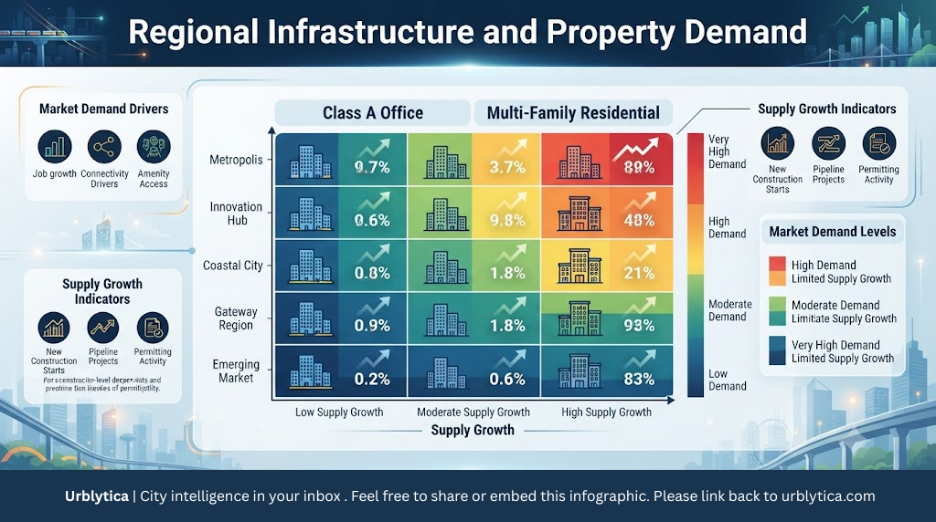
Investors who are looking at best cities for growth often monitor the commercial permit data as a leading indicator of regional prosperity. The city is currently in the middle of a massive infrastructure expansion, focusing on transit connectivity and mixed use zoning, which aims to reduce the reliance on individual vehicle transit. This urban design strategy is essential for maintaining the quality of life that attracted the workforce in the first place.
For deeper city level insights, visit Urblytica’s City Intelligence Dashboard.
|
Property Type |
Demand Level |
Supply Growth |
Market Outlook |
|
Class A Office |
High |
Moderate |
Bullish |
|
Industrial/Logistics |
High |
High |
Bullish |
|
Multi-Family |
Very High |
High |
Stable |
|
Retail/Mixed-Use |
Moderate |
Low |
Neutral |
The Senior Care and Social Infrastructure Economy
A critical, yet often overlooked, component of the local economy is the senior care sector. As the population matures, there is an increasing demand for sophisticated assisted living services and long term care facilities. This sector is not just a social service; it is a major employer and a source of significant local investment.
Businesses interested in health and senior care often finding that the local regulatory environment is highly supportive. Families looking to ensure the stability of their loved ones also utilize comprehensive resources for financial planning to navigate the complexities of healthcare management. This industry serves as a stabilizing force for the regional economy, ensuring that the needs of all age demographics are met.
The growth in the senior care sector is reflective of a maturing society that values high quality service, professional certification, and patient centered care models. This sector continues to attract private equity interest, further diversifying the investment opportunities within the city.
Operational Efficiency and Productivity Metrics
In an environment as competitive as this, the success of a firm often comes down to internal operational efficiency. The reliance on advanced digital tools has become a prerequisite for survival. Whether it is managing a dispersed workforce using time blocking or calculating the break even point for a new service line, businesses in the region are characterized by a culture of constant optimization.
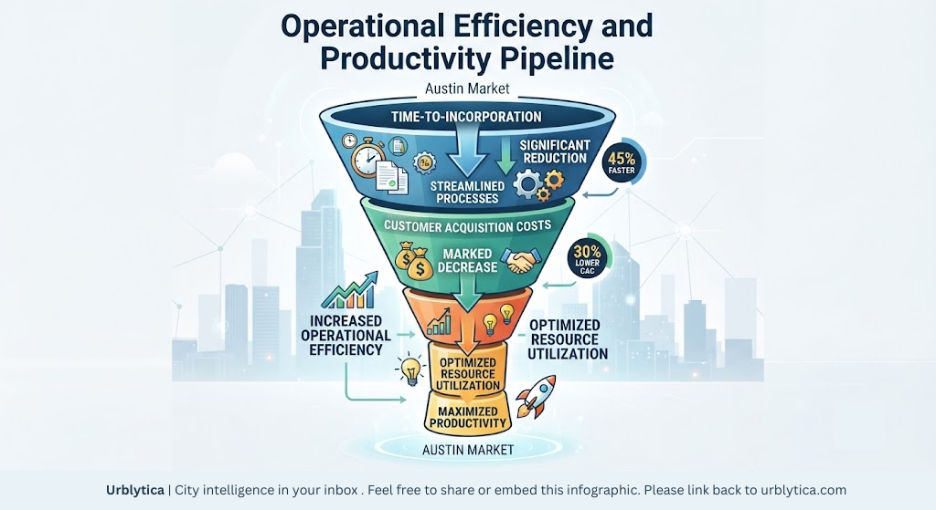
For those managing the administrative side of a business, the ability to clean and organize data is essential. Many firms now use automated address cleaners to maintain accurate client databases. This focus on digital hygiene is what allows lean startups to compete with established giants, providing them with the agility they need to pivot when the market demands change.
|
Metric |
Industry Standard |
Austin Average |
Improvement Trend |
|
Customer Acquisition Cost |
Moderate |
Competitive |
Decreasing |
|
Data Processing Accuracy |
92 percent |
98 percent |
Increasing |
|
Time to Incorporation |
14 Days |
5 Days |
Decreasing |
|
Workforce Productivity |
Base |
15 percent Higher |
Increasing |
Outlook and Strategic Considerations
The outlook for the region through the end of 2026 and beyond remains positive. The combination of a high growth talent pipeline, business friendly laws, and a diverse industrial base creates a self reinforcing cycle of prosperity. While challenges such as housing costs and infrastructure bottlenecks exist, the city has historically proven its ability to pivot and adapt to these pressures.
Investors who monitor the top 100 fastest growing cities understand that growth of this magnitude requires a long term perspective. The focus is shifting from simple headcount growth to sustainable, high value development. Municipal leaders are prioritizing workforce training, ensuring that the local population can fill the high skill roles required by the emerging biotech and advanced manufacturing sectors.
This strategy ensures that the city does not just attract talent from the outside but also develops it from within. For entrepreneurs and investors, this means the window of opportunity is not closing; rather, it is evolving into a more mature, stable, and rewarding environment for those who are prepared to navigate its complexities.
The ongoing commitment to fiscal responsibility and strategic urban planning will be the decider in whether the current boom converts into a permanent shift in the national economic landscape. As it stands, the data suggests that momentum is sufficient to maintain dominance in several key industries for the foreseeable future.
Frequently Asked Questions?
1. What is the primary factor driving the Austin economy in 2026?
The primary factor is the strategic diversification of the industrial base combined with a continuous influx of high skilled labor from across the country.
2. How can I determine the cost of doing business in this region?
You can use financial analysis tools to evaluate overhead, tax implications, and operational costs to build a realistic business model.
3. Why is demographic data critical for an investment strategy?
Demographic shifts dictate the demand for services, real estate, and consumer goods, allowing investors to forecast market needs effectively.
4. Are there significant opportunities in the senior care sector?
Yes, as the population matures, the demand for assisted living and long term care services has created a robust and high growth investment niche.
5. How does the regulatory environment support new business formation?
The state provides a transparent and efficient framework that allows for rapid business incorporation and minimal administrative friction.
6. Is the real estate market expected to stabilize?
The real estate market is currently seeing high demand, particularly in industrial and multifamily sectors, which is expected to continue as corporate interest grows.
7. What resources exist for relocating families and businesses?
Individuals can access relocation cost calculators to plan their transition, considering tax, housing, and operational costs.
8. How should startups approach the competitive landscape?
Startups should focus on niche markets and operational efficiency, utilizing professional business formation services to maintain compliance and focus on growth.
9. Why is data management important for local businesses?
In an increasingly digital economy, effective data sanitization and management are essential for security and operational excellence.
10. Where can I find information on buying an existing business?
The local marketplace is active for acquisitions; you can explore businesses for sale through regional platforms to find opportunities that align with your strategy.
Put Your Brand in Front of Movers & Founders
Reach a high-intent relocation and business audience across thousands of cities. Claim your space today.
View Placement Rates →