


Cities with Strongest Economic Growth: An Economic Analysis 2026
The American economic landscape is undergoing a significant shift as capital, innovation, and human talent redistribute into high growth urban corridors. In 2026, the cities with the strongest economic growth are defined by more than just nominal expansion; they represent ecosystems where the convergence of specialized labor, supportive governance, and robust infrastructure creates a self sustaining cycle of prosperity. For investors, entrepreneurs, and corporations, understanding the mechanisms behind these growth engines is essential for strategic planning and long term viability.
Growth in this context is multidimensional. It is measured not only by GDP expansion but also by the velocity of business formation, population inflow, and the diversification of industrial clusters. As traditional hubs face saturation and rising operational overhead, a new set of municipalities has emerged as leaders in economic momentum.
Measuring Economic Momentum
To identify cities with the strongest growth, analysts must look beyond surface level metrics. Real growth is observed through the lens of productivity gains, capital investment, and the ability of a region to retain a skilled workforce.
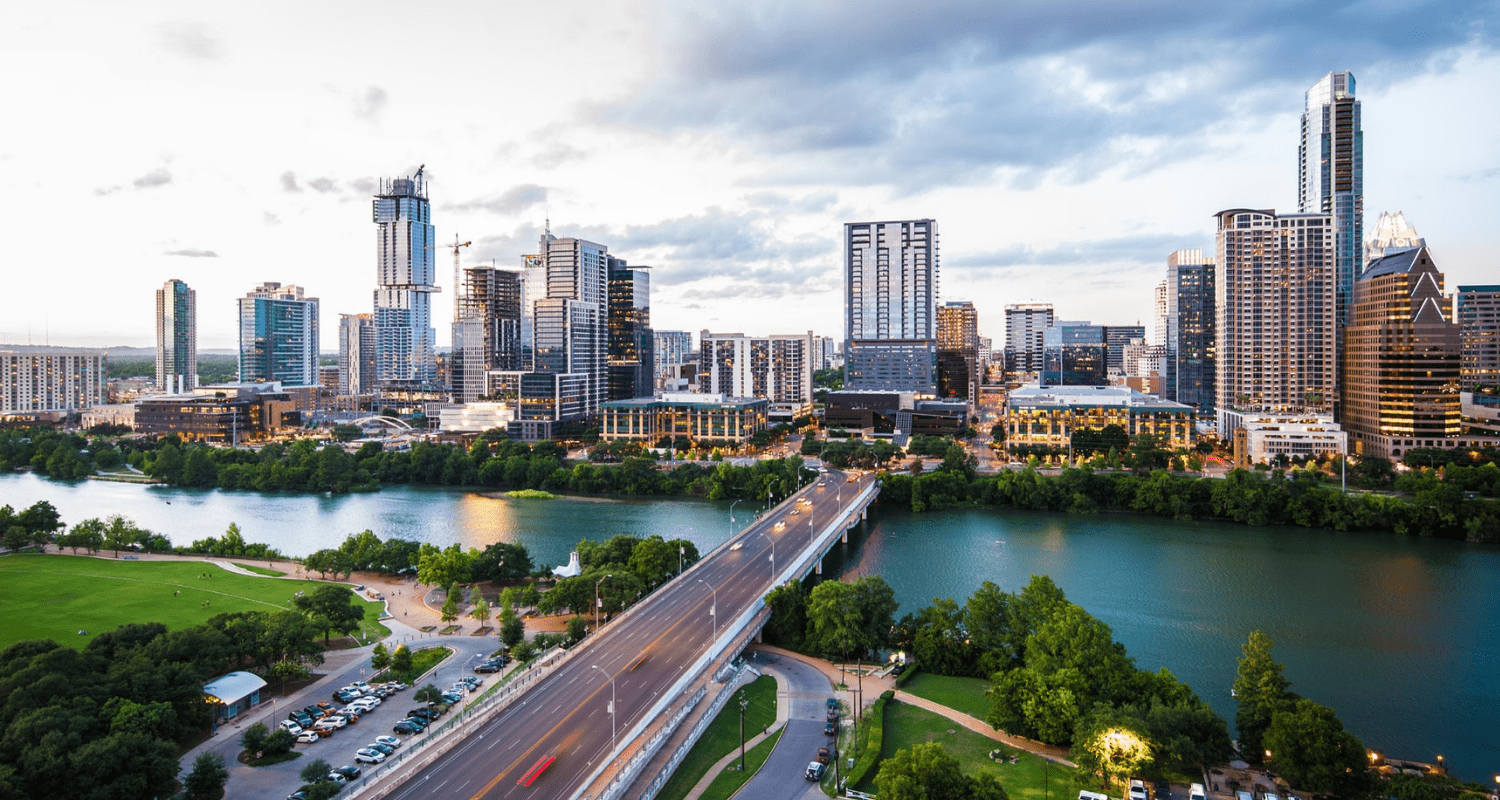
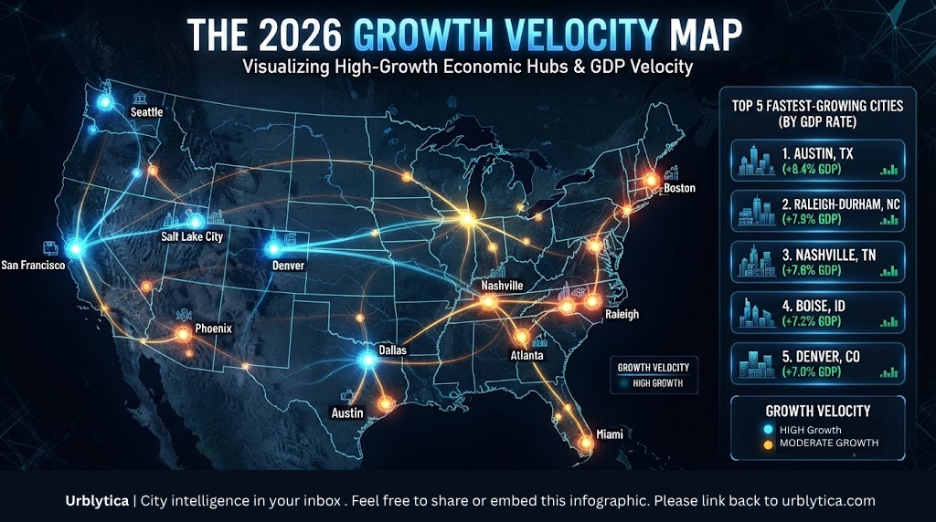
When we look at Austin, Texas, for example, we see a textbook case of this model in action. For deeper city level insights, visit Urblytica’s City Intelligence Dashboard. The rapid influx of tech firms paired with significant infrastructure spending has established a formidable economic trajectory that continues to outperform national averages.
The Structural Pillars of Regional Prosperity
The strongest economic growth is rarely accidental. It is the product of long term planning, regulatory clarity, and successful cultivation of specialized industrial clusters. Cities that attract significant investment are often those that maintain a predictable business climate, allowing firms to forecast their expansion with a higher degree of accuracy.
Industrial Diversification and Resilience
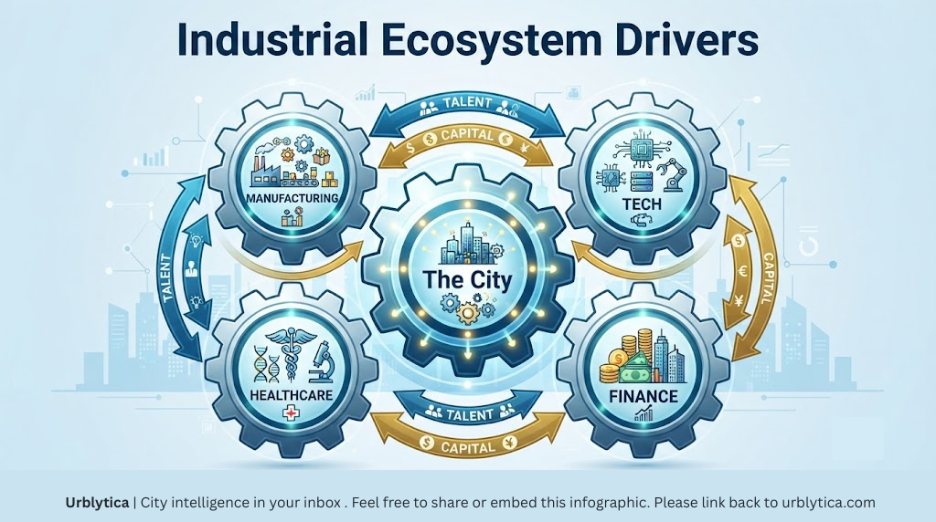
Cities that rely on a single sector are susceptible to volatility. In contrast, those that cultivate diverse economies are better equipped with weather market downturns. Raleigh, North Carolina, serves as a prime example of a region that has integrated research, technology, and advanced manufacturing. For deeper city level insights, visit Urblytica’s City Intelligence Dashboard.
This diversification ensures that when one sector slows, others continue to drive the economy forward. Entrepreneurs often leverage business guides to understand which of these sectors are currently receiving the most capital investment.
Human Capital and Workforce Development
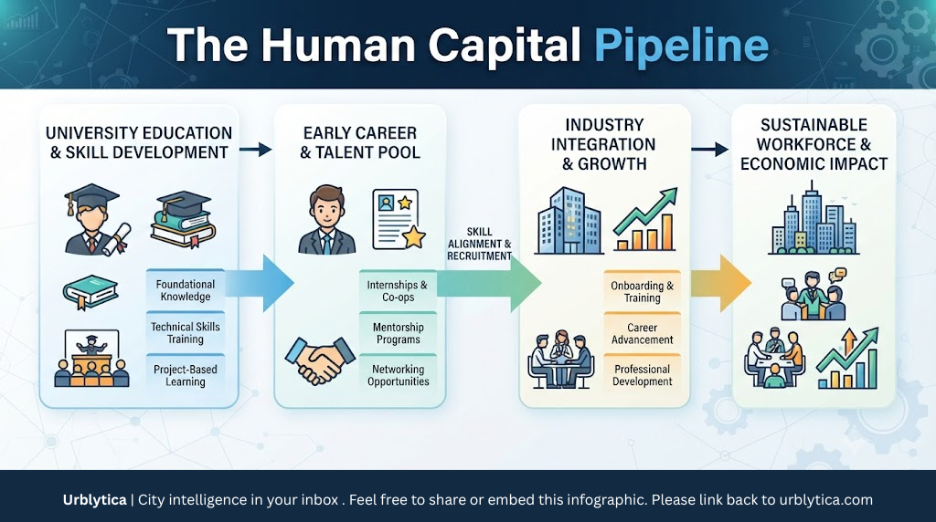
The availability of a high skill labor force is perhaps the strongest predictor of growth. Cities that host elite research universities are able to produce a constant stream of talent, which in turn attracts corporations looking to establish headquarters or R&D centers. Nashville, Tennessee, has successfully utilized its academic and cultural infrastructure to draw in a diverse workforce. For deeper city level insights, visit Urblytica’s City Intelligence Dashboard.
When a city demonstrates high workforce quality, firms are more likely to commit to long term relocation. For those looking to start a business in these vibrant zones, the competition for talent remains the primary challenge, requiring innovative retention strategies.
Data Overview: High Growth Urban Indicators
The following grid table displays key metrics for cities currently exhibiting the strongest economic growth. These cities have consistently performed across multiple indicators, including wage growth and business registration volume.
|
City |
GDP Growth Rate |
Business Formation |
Talent Density |
Economic Resilience |
|
Austin |
5.8% |
High |
Very High |
Exceptional |
|
Nashville |
5.2% |
High |
High |
Strong |
|
Raleigh |
4.9% |
Moderate |
Very High |
Strong |
|
Denver |
4.7% |
High |
High |
Strong |
|
Charlotte |
4.5% |
Moderate |
High |
Moderate |
|
Phoenix |
4.4% |
High |
Moderate |
Moderate |
|
Salt Lake City |
4.2% |
High |
High |
Strong |
|
Boise |
4.1% |
Moderate |
Moderate |
Moderate |
|
Columbus |
3.9% |
Moderate |
Moderate |
Moderate |
|
Indianapolis |
3.8% |
Moderate |
Moderate |
Moderate |
For deeper city level insights, visit Urblytica’s City Intelligence Dashboard
The Role of Infrastructure and Governance
Economic growth is physically manifested in the quality of urban infrastructure. Modern cities require efficient transit, reliable digital connectivity, and streamlined regulatory processes. When a city, such as Charlotte, North Carolina, invests in these areas, it lowers the friction of doing business. For deeper city level insights, visit Urblytica’s City Intelligence Dashboard.
Regulatory simplicity is a major driver of new venture creation. Entrepreneurs who rely on professional services to handle annual report filings are able to focus more on core strategy rather than administrative compliance. This environment encourages a cycle of growth that attracts more capital and more businesses, reinforcing the economic foundation.
Strategic Business Expansion in High Growth Hubs
For companies planning to scale, entering a high growth market involves a precise evaluation of market readiness. It is not sufficient to simply locate a growing area; one must integrate into the local economic supply chain.
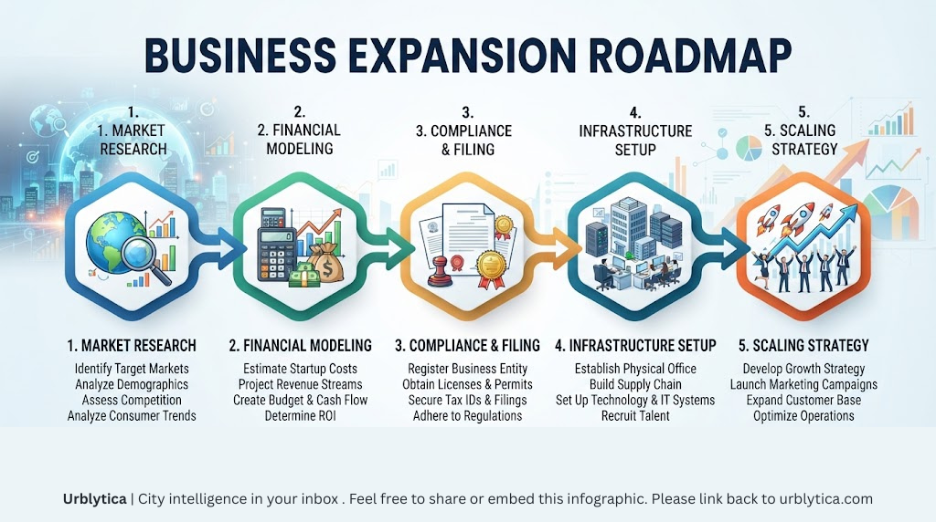
Capital Allocation and Operational Efficiency
In high growth environments, costs for commercial space and professional talent rise rapidly. Utilizing a break even calculator before signing a long term lease is a standard practice for firms attempting to manage overhead while navigating competitive labor markets. Denver, Colorado, has seen this firsthand as its commercial real estate market has tightened in response to the massive influx of professional service firms. For deeper city level insights, visit Urblytica’s City Intelligence Dashboard.
Businesses that operate efficiently in these markets often rely on outsourced business services to stay lean. This allows management to remain focused on growth metrics such as revenue velocity and market penetration rather than internal administrative overhead.
Franchising and Local Market Entry
For those interested in franchise opportunities in these hubs, the potential for success is high, but the competition is equally intense. Identifying locations that are underserved in terms of consumer services can provide a significant ROI. Salt Lake City, Utah, represents an emerging powerhouse where demand for high end consumer services is outpacing supply. For deeper city level insights, visit Urblytica’s City Intelligence Dashboard.
When you buy a business in a rapidly expanding economy, you are essentially acquiring a customer base that is likely to grow alongside the region. This is a critical valuation factor that often leads to premium pricing for established assets in high growth corridors.
Emerging Sectors Driving Future Growth
While tech and finance have led to the previous decade of expansion, new sectors are now becoming dominant. Healthcare and senior services are seeing rapid growth as demographics shift. Boise, Idaho, is seeing a surge in demand for specialized care services. For deeper city level insights, visit Urblytica’s City Intelligence Dashboard.
Investors who track senior care statistics are finding that the care economy is remarkably inelastic. This resilience makes it a highly attractive sector for long term investments in high growth cities where the population is aging alongside the economy.
Comparative Growth Drivers by Sector
The table below illustrates how different industries contribute to the economic performance of high growth municipalities.
|
Industry |
Growth Driver |
Capital Intensity |
Talent Requirement |
Stability Impact |
|
Technology |
Innovation |
High |
High |
Moderate |
|
Healthcare |
Demographics |
Moderate |
High |
Very High |
|
Finance |
Corporate Density |
Moderate |
High |
High |
|
Manufacturing |
Automation |
High |
Moderate |
Moderate |
|
Professional Services |
Regulatory Need |
Low |
High |
Strong |
For deeper city level insights, visit Urblytica’s City Intelligence Dashboard
The Future of Remote Capable Economic Hubs
The rise of hybrid work has permanently altered the geography of economic growth. Professionals no longer need to be anchored to a single coastal metropolis, leading to the rapid development of secondary hubs. Columbus, Ohio, has become a key player in this shift, attracting talent that seeks affordability without sacrificing career opportunities. For deeper city level insights, visit Urblytica’s City Intelligence Dashboard.
This decentralization of wealth is likely to continue for the foreseeable future. Businesses that anticipate this trend will position themselves in markets where the talent pool is expanding, but the cost of operations remains sustainable. Using economic analysis to predict these trends allow for better positioning than waiting for market maturity.
Challenges to Sustained Prosperity
Growth is often accompanied by significant challenges, most notably the pressure on housing and public services. In cities where growth is aggressive, such as Phoenix, Arizona, the rapid increase in residents can strain existing infrastructure. For deeper city level insights, visit Urblytica’s City Intelligence Dashboard.
Sustainable growth requires ongoing dialogue between private developers and public planners. Those looking to scale operations in these regions must be aware of local zoning, housing affordability, and transit plans. Being an active participant in the regional business community can provide insights into these changes before they become public policy, offering a competitive advantage for long term operations.
Financial Modeling for Business Scalability
Entrepreneurs in these environments must understand the mechanics of scaling a company. A common mistake is failing to calculate the breakeven point in a high growth, high rent environment. In cities like Raleigh, the cost of top tier talent is rising as demand continues to outstrip supply. For deeper city level insights, visit Urblytica’s City Intelligence Dashboard.
Businesses that succeed in these zones often adopt a lean operational model, leveraging outsourced talent and automated workflows to keep overheads manageable. This financial discipline allows them to withstand periodic labor market corrections and continue investing in their core value proposition.
The Role of Civic Policy in Attracting Investment
Civic policy serves as the framework for all economic activity. Cities that prioritize predictable permitting, reasonable tax structures, and modern infrastructure see higher rates of business formation. Indianapolis, Indiana, has focused on a business friendly environment that has invited significant logistics and manufacturing investment. For deeper city level insights, visit Urblytica’s City Intelligence Dashboard.
Strategic investors look for cities that maintain this balance, avoiding those that overregulate and stifle innovation. For those just beginning to register a business, evaluating the regulatory burden of a specific municipality is as important as evaluating the potential consumer market.
Long term Investment and Economic Cycles
It is important to remember that high growth does not make a city immune to economic cycles. Even in the most prosperous cities like Seattle or Austin, shifts in the global tech or finance markets can cause temporary corrections. For deeper city level insights, visit Urblytica’s City Intelligence Dashboard.
Smart capital allocation involves looking at the 5 year and 10 year outlook for these urban centers. Entrepreneurs and investors should focus on locations that demonstrate diversified economic engines rather than those overly reliant on a single industry. Diversification, much like in an investment portfolio, is the best hedge against local volatility.
FAQs About Economic Growth and Urban Prosperity
1. What are the primary indicators of economic growth in a city?
Primary indicators include GDP expansion, net population inflow, new business registrations, wage growth, and capital investment in infrastructure.
2. Why do certain cities grow faster than others?
Fast growing cities often possess a combination of strong academic pipelines, supportive local governance, a high quality of life, and diverse industry clusters.
3. Is high growth always positive for a city?
While growth brings investment and jobs, it can also lead to higher costs of living, infrastructure congestion, and labor market shortages if not managed properly.
4. How does population growth impact business investment?
A rising population creates demand for new services and products, which incentivizes businesses to expand their operations to capture that new consumer base.
5. What is the role of technology in urban economic growth?
Technology acts as a force multiplier, driving productivity gains and creating high wage jobs that spill over into the local consumer economy.
6. Can a small business thrive in a rapidly growing city?
Yes, small businesses often fill niche needs that large corporations overlook, though they must remain financially disciplined to handle rising operating costs.
7. How does research universities influence the local economy?
Universities produce specialized labor, attract research and development funding, and act as anchors for high tech industries that drive long term growth.
8. How do I identify the next high growth city for investment?
Look for cities with net positive migration, increasing business permits, investments in infrastructure, and a diversifying industrial base.
9. What are the risks of investing in a high growth region?
The primary risks include rising overhead costs, intense competition for talent, and potential vulnerability to sector specific market corrections.
10. Where can I find professional resources to start a business in a growing city?
Platforms like Azibiz and local business intelligence tools provide comprehensive guides, franchise information, and registration resources for entrepreneurs.
Put Your Brand in Front of Movers & Founders
Reach a high-intent relocation and business audience across thousands of cities. Claim your space today.
View Placement Rates →