


Cities with Lowest Unemployment: Economic Analysis 2026

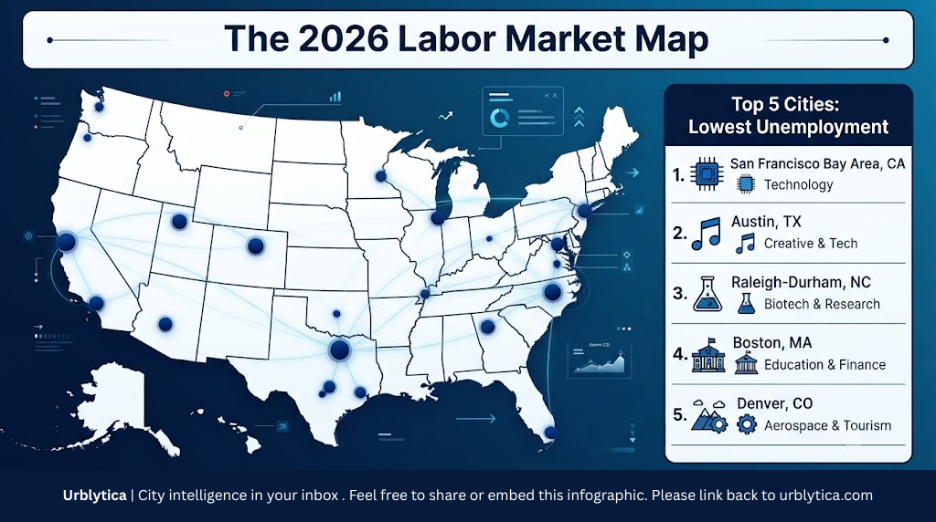
The contemporary United States economic landscape is defined by a paradox of growth: as technology evolves and productivity increases, the competition for labor in specific metropolitan corridors has intensified to historic levels. While national unemployment figures capture a broad view of the macroeconomy, they often mask the intense, localized labor scarcity occurring in high growth municipalities. In 2026, the cities maintaining the lowest unemployment rates serve as models for economic resilience, demonstrating how diversified industry, strategic education pipelines, and responsive governance converge to sustain a nearly saturated labor market.
For businesses and entrepreneurs, these regions present both an opportunity and a hurdle. The existence of near full employment is a clear signal of local purchasing power and demand, yet it implies a significantly higher cost of entry regarding recruitment and retention. This analysis explores the structural foundations of these top tier labor markets and provides the intelligence required to successfully scale operations within them.
The Structural Drivers of Low Unemployment
Economic stability in these hubs is not accidental; it is the product of long term planning. When a municipality maintains a consistent unemployment rate below the national average, it suggests that its underlying industries, whether technology, finance, or advanced manufacturing are robust enough to weather cyclical downturns.
Economists analyze these markets using specific labor participation metrics. The unemployment rate Ur is formulated as:
Ur=(Up/Lf)×100
In this model, Up reflects the number of unemployed individuals actively seeking work, while Lf represents the total labor force. When Lf remains high while UP remains low, it indicates a high efficiency market where human capital is fully utilized.
Cities like Lincoln, Nebraska exhibit this stability through a unique blend of government stability and education based service sectors.
For deeper city level insights, visit Urblytica’s City Intelligence Dashboard
Economic Performance Matrix
The following grid provides a comparative overview of key municipalities that have maintained top tier unemployment rankings throughout the current fiscal year. These figures represent the baseline stability for businesses looking to expand.
|
City |
Unemployment Rate |
Economic Engine |
Business Climate |
|
Lincoln |
1.8% |
Education/Gov |
High |
|
Madison |
1.9% |
Technology/Biotech |
High |
|
Bismarck |
2.1% |
Energy/Finance |
Moderate |
|
Salt Lake City |
2.2% |
Tech/Finance |
Very High |
|
Burlington |
2.3% |
Academia/Tourism |
Moderate |
|
Fargo |
2.4% |
Ag Tech/Logistics |
Moderate |
|
Boise |
2.5% |
Manufacturing/Tech |
High |
|
Sioux Falls |
2.6% |
Financial Services |
High |
|
Portsmouth |
2.6% |
Defense/Tech |
High |
|
Ames |
2.7% |
Research/Academia |
Moderate |
Strategic Considerations for New Market Entry
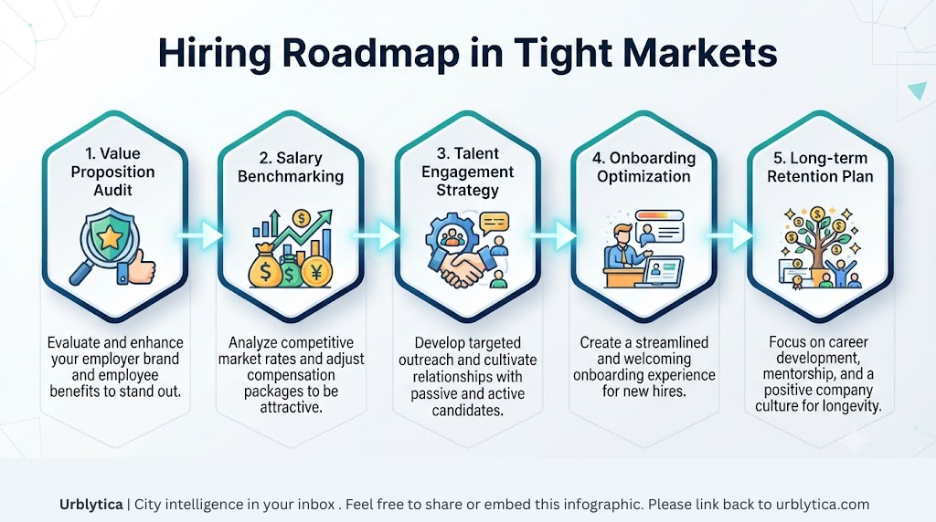
Entering a market characterized by intense competition for talent requires more than capital; it requires a sophisticated operational strategy. When you decide to start a business, you are not just acquiring assets but competing for a finite pool of workers.
In low unemployment cities, wage inflation is a common byproduct of the market dynamics. Firms must pivot from volume based hiring to retention focused operations. This often involves providing flexible working conditions or comprehensive benefits that are above the local median. Investors looking to buy a business in such cities often perform a deeper audit of the current workforce to ensure that key staff members are secured with long term contracts.
The Role of Industry Diversification
Diversification is the primary hedge against labor market volatility. Cities that rely on a single sector often experience the boom and bust cycle, where employment figures spike and crater according to global commodity prices or industry trends. Conversely, cities with a mix of healthcare, professional services, and logistics maintain consistent demand.
Madison, Wisconsin, exemplifies this diversification, effectively balancing its university driven economy with a growing tech and biotechnology cluster.
For deeper city level insights, visit Urblytica’s City Intelligence Dashboard
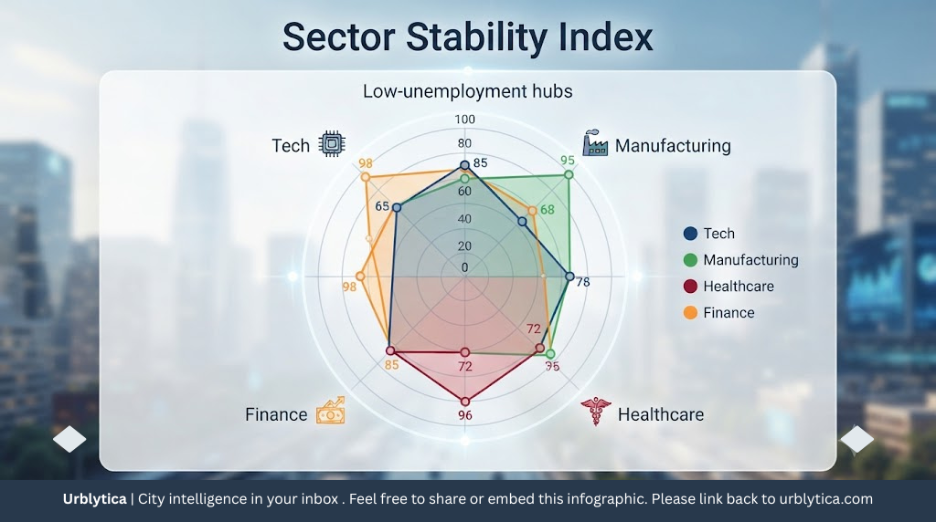
This industrial mix ensures that when one sector slows, others continue to pull the economy forward. Entrepreneurs evaluating locations for a new enterprise should prioritize areas where business services and local commerce are not overly dependent on a single corporate employer.
Human Capital and the Academic Pipeline
The strongest predictor of long term low unemployment is the presence of an elite research institution. Universities act as catalysts, creating a continuous feedback loop of talent. They provide the highly skilled workforce needed for accounting and finances roles, as well as the technical staff needed for modern industrial operations.
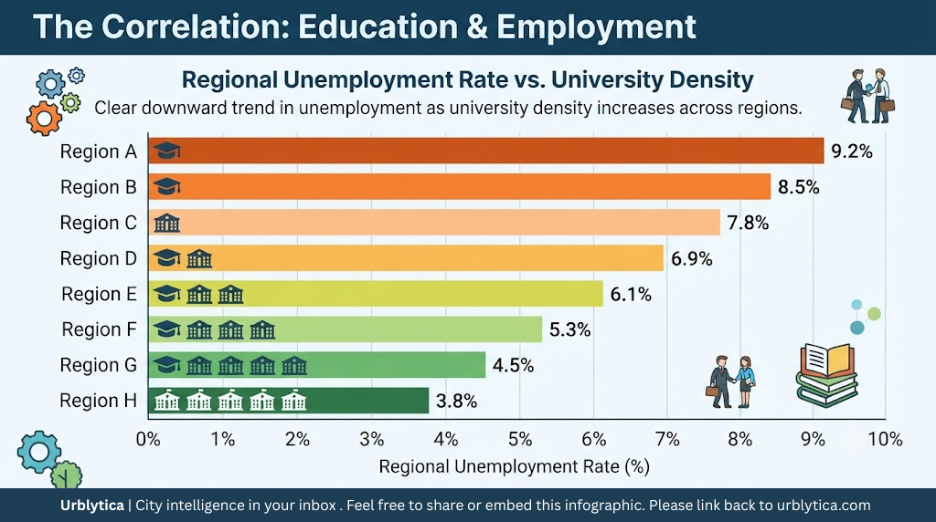
Cities such as Ames, Iowa, or Burlington, Vermont, rely heavily on their academic institutions to feed the local labor market. This pipeline creates a buffer against labor shortages, as the city is constantly importing and producing new talent. For an expanding company, tapping into this pipeline is the most effective way to solve long term staffing challenges.
Financial Modeling and Operational Overhead
In high demand labor markets, operational efficiency is nonnegotiable. If you are entering a city where the cost of living and the cost of labor are both elevated, you must ensure that your business model is leaning.
Before committing to a lease or a long term hiring plan, utilize a break even calculator to understand your overhead limits. In these environments, profit margins can be compressed by high talent acquisition costs. You may also want to use a salary to hourly conversion tool to properly structure your compensation packages to remain competitive.
Comparative Growth and Stability Metrics
This table illustrates the relationship between employment stability and long term economic growth indicators.
|
City |
Wage Growth % |
Cost of Living Index |
Talent Resilience |
|
Lincoln |
3.5 |
95 |
High |
|
Madison |
4.2 |
105 |
Very High |
|
Bismarck |
3.1 |
92 |
Moderate |
|
Salt Lake City |
4.9 |
108 |
High |
|
Burlington |
3.7 |
102 |
Moderate |
|
Fargo |
3.3 |
94 |
High |
|
Boise |
4.5 |
103 |
High |
For deeper city level insights, visit Urblytica’s City Intelligence Dashboard
The Impact of Regulatory and Tax Environments
State level policy is a silent determinant of labor success. Cities located in states with business friendly registration processes tend to see higher levels of entity creation. When you register a business, the ease of compliance can impact your ability to focus on your core operations.
In cities like Boise, Idaho, the combination of a favorable regulatory environment and a high growth population have created a unique surge in the labor force. This policy climate encourages investment, which in turn fuels job creation, maintaining the low unemployment cycle. Entrepreneurs should rely on professional platforms for annual report filing to ensure that compliance obligations do not distract from talent management.
Demographic Shifts and Lifestyle Attraction
Employment is not the only draw for professionals; lifestyle, safety, and cultural amenities play a crucial role. Cities with low unemployment often have a high livability score. Professionals are increasingly choosing to relocate to secondary hubs that offer a higher quality of life than the traditional, over congested coastal cities.
This trend is a significant opportunity for businesses that can operate remotely or in hybrid settings. By establishing a presence in these cities, companies can leverage the high quality of life to attract top tier talent who are seeking a better balance.
The Future of the Care Economy in Stable Hubs
As these cities mature, the demographics often shift toward a mix of young professionals and a growing senior population. This creates an emergent market for health and senior care. As the local population ages, the demand for stable, consistent services grows.
Investors who understand this shift can find opportunities in the senior living sector.
For deeper city level insights, visit Urblytica’s City Intelligence Dashboard
When you analyze senior care statistics for a specific city, you can better predict where the next cycle of business opportunity will arise. This is an excellent area for expansion because the demand is largely inelastic; people always require high quality care, regardless of the economic cycle.
Challenges of Maintaining a Tight Market
The primary challenge for any city with an unemployment rate under 3 percent is managing the growth without triggering runaway costs. Labor scarcity can force businesses to move away from low margin, high volume models toward high margin, specialized services.
If your company struggles with high turnover in these areas, focus on your internal culture. Retaining an employee is far cheaper than sourcing, onboarding, and training a replacement in a market where the applicant's pool is thin. Utilizing time blocker tools can also help your teams manage their schedules more efficiently, reducing burnout and improving overall productivity.
Long Term Sustainability and Policy Influence
Sustaining low unemployment is not just about the current fiscal year; it is about infrastructure and planning. Cities that anticipate population growth by investing in public transit, housing, and digital connectivity are better positioned to support an expanding labor force.
Government bodies and private entities often work in tandem to create this stability. For example, tax incentives for research and development have been pivotal in cities like Madison, where the growth of the biotechnology corridor has created a wealth of high paying, stable jobs. This collaboration between the public sector and private enterprise is a hallmark of successful labor markets.
Risk Factors in Low Unemployment Zones
While low unemployment is generally seen as a sign of success, it can also create bottlenecks. When a city reaches full employment, the lack of available labor can stifle growth, as companies cannot hire the staff needed to expand. This often leads to increased automation as a substitute for human labor, particularly in the logistics and manufacturing sectors.
Businesses entering these markets must conduct thorough due diligence. Relying on professional data sources to track labor force mobility is essential. If a city has a net migration outflow, even if current unemployment is low, it may signal future workforce shortages that could undermine your operational goals.
The Role of Professional Services
Professional services firms in law, accounting, and consulting are the glue that holds these stable markets together. As companies expand into these regions, they require experts who understand the local regulatory climate. Utilizing business services providers can help you navigate local permitting, licensing, and compliance requirements, allowing your leadership team to maintain focus on growth strategies.
For deeper city level insights, visit Urblytica’s City Intelligence Dashboard
Future Trends: The Decentralization of Work
The decentralization of high skill work is shifting the economic weight from traditional global hubs to mid tier cities. Professionals who were once forced to live in expensive, high unemployment cities are now migrating to regions with better cost to income ratios.
This shift is accelerating the development of the new tier of economic hubs. These cities, such as Fargo or Portsmouth, are becoming centers for specialized work that once required a headquarters presence in larger metropolitan areas. Entrepreneurs who position themselves in these emerging markets now will likely reap the benefits of early mover advantages in the coming decade.
Frequently Asked Question
1. What constitutes a healthy unemployment rate for a city?
A rate between 3 percent and 5 percent is typically considered full employment, though many fast growing cities consistently sustain rates below 3 percent.
2. Do cities with low unemployment always have high wages?
Often, yes, because the high demand for labor forces employers to compete on salary, which drives the median wage in the region.
3. What is the impact of housing on the unemployment rate?
Affordable housing is critical; if workers cannot afford to live near their jobs, they will move, creating labor shortages and increasing unemployment in service sectors.
4. Can the unemployment rate be too low?
Yes, an extremely low rate can signal a labor shortage that stunts growth, as businesses cannot find the staff they need to scale their operations.
5. How do universities influence unemployment?
Universities act as an engine for human capital, consistently producing qualified graduates who fill specialized roles and attract corporate investment.
6. What should I prioritize when expanding into a tight market?
Prioritize retention, offer competitive benefits beyond just salary, and utilize automation to maximize your existing staff capacity.
7. How can technology help a business in a low unemployment region?
Technology can automate repetitive tasks, allowing your existing staff to focus on high value work, which is essential when hiring new employees is difficult.
8. Does population growth lower unemployment?
Generally, yes, as new residents bring demand for services, which creates new jobs, if infrastructure can keep pace with the influx.
9. How do I evaluate a city's regulatory climate for business?
Research the state's business filing requirements and look for cities that prioritize efficiency in their licensing and permitting processes.
10. Are low unemployment cities better for startups?
They are better for growth due to the talent pool, but they require a very disciplined financial approach due to the higher costs of labor and real estate.
Put Your Brand in Front of Movers & Founders
Reach a high-intent relocation and business audience across thousands of cities. Claim your space today.
View Placement Rates →