


Fastest Growing Industries in Florida - Economic Growth 2026

Florida is currently experiencing a historic economic transition. The state has moved beyond its long standing reputation as a tourism and retirement destination, evolving into a multifaceted powerhouse of innovation, logistics, and professional services. As businesses prioritize regional business climate analysis to navigate this dynamic landscape, it is evident that the state is attracting capital and intellectual property at an unprecedented rate. This growth is structural, fueled by a favorable fiscal environment, significant population migration, and a strategic geographic position that serves as a bridge to international markets.
The Economic Foundation of 2026
The contemporary Florida economy is characterized by a deliberate diversification away from seasonal reliance. By examining city level economic data profiles, we observe that growth is no longer limited to major metropolitan areas. Secondary markets are flourishing, supported by improved infrastructure and a workforce that is increasingly mobile and technically skilled. Corporations are leveraging business relocation intelligence to identify regions that offer a synthesis of operational cost efficiency and high caliber talent availability. The resulting economic environment is robust, showing resilience even when subjected to shifting national macroeconomic conditions.
|
Industry Sector |
Primary Economic Driver |
Key Regional Hubs |
|
Financial Technology |
Global Capital Flow |
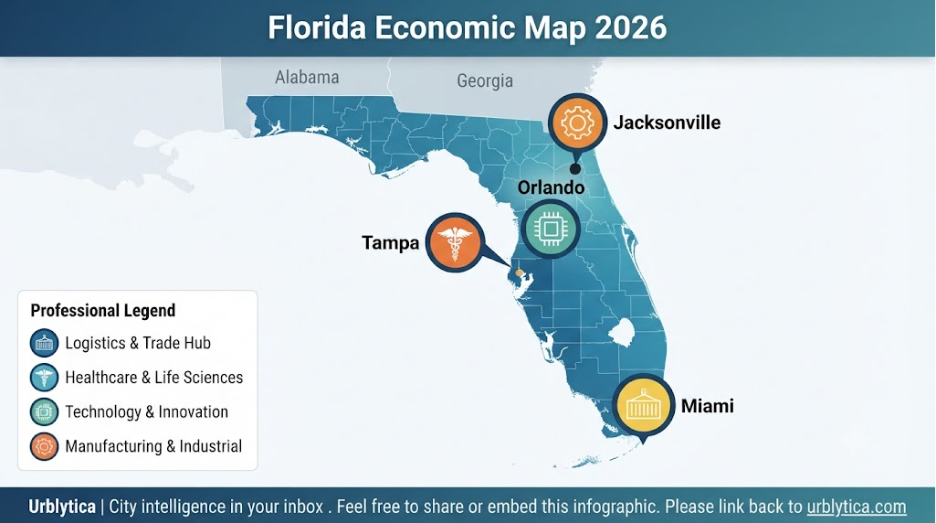
Miami, West Palm Beach |
|
Cybersecurity |
Cloud Defense Demand |
Tampa, Orlando |
|
Logistics & Maritime |
Supply Chain Reshoring |
Jacksonville, Port Everglades |
|
Healthcare Informatics |
Genomic Research |
Gainesville, Jacksonville |
|
Green Technology |
Renewable Grid Setup |
Sarasota, St. Petersburg |
|
Advanced Manufacturing |
Defense Integration |
Melbourne, Pensacola |
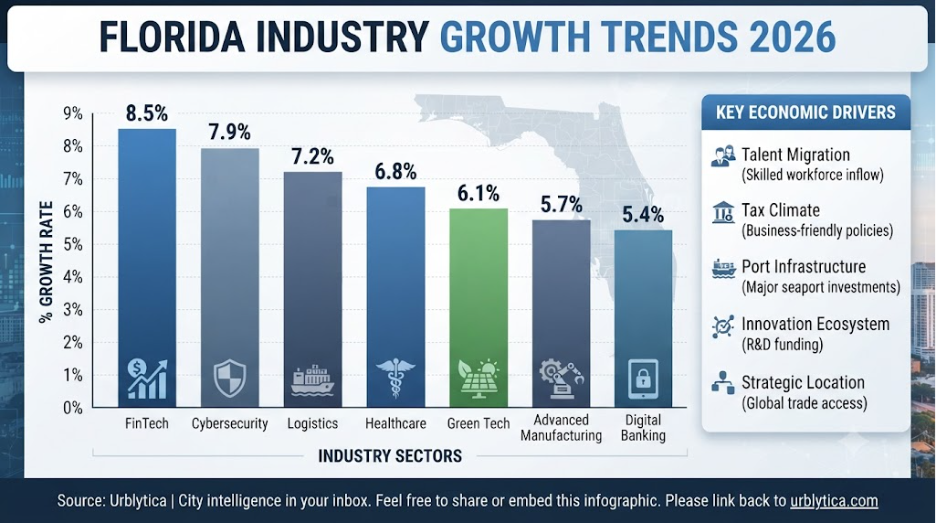
Financial Technology and the Global Gateway
Miami has effectively transitioned into a global financial nexus. The influx of venture capital and the migration of hedge funds have solidified its status as a critical node in the financial technology revolution. This sector benefits from a concentration of talent that relocated to the region, seeking a higher quality of life while maintaining access to international markets. Entrepreneurs who look too incorporate your business online often select Miami as their primary launchpad, recognizing that the synergy between regulatory ease and a vibrant tech ecosystem creates a high velocity environment where capital deployment is efficient. The presence of diverse talent ensures that companies can scale their operations rapidly, leveraging local market intelligence to navigate the complexities of international trade.
Logistics, Maritime Infrastructure, and Supply Chain Modernization
Florida geography acts as a strategic asset. The state hosts some of the most advanced deep water ports in the Western Hemisphere, positioning it as a vital link in global supply chains. The logistics industry is evolving beyond traditional trucking into a high tech field dominated by warehouse management, robotics, and predictive analytics. As corporations seek stability in their distribution networks, they leverage local market intelligence data to identify regions offering proximity to both maritime hubs and interstate rail networks. This surge in industrial activity is fostering secondary growth in manufacturing, as companies prioritize proximity to their final points of consumption.
Cybersecurity and Defense Simulation
The corridor stretching from Tampa to Orlando has become a formidable center for cybersecurity and defense simulation. Tampa leverages its proximity to major military commands to foster a private sector deeply integrated with federal defense requirements. This creates a stable pipeline of technical talent proficient in cloud security, threat mitigation, and data integrity. For entities looking to start an LLC online, the cybersecurity sector in central Florida provides a unique opportunity to enter a market shielded from traditional consumer sentiment swings. Government contracts and the ongoing necessity for digital infrastructure hardening ensure that growth remains consistent, regardless of short term macroeconomic volatility.
Operational Metrics for Market Entry
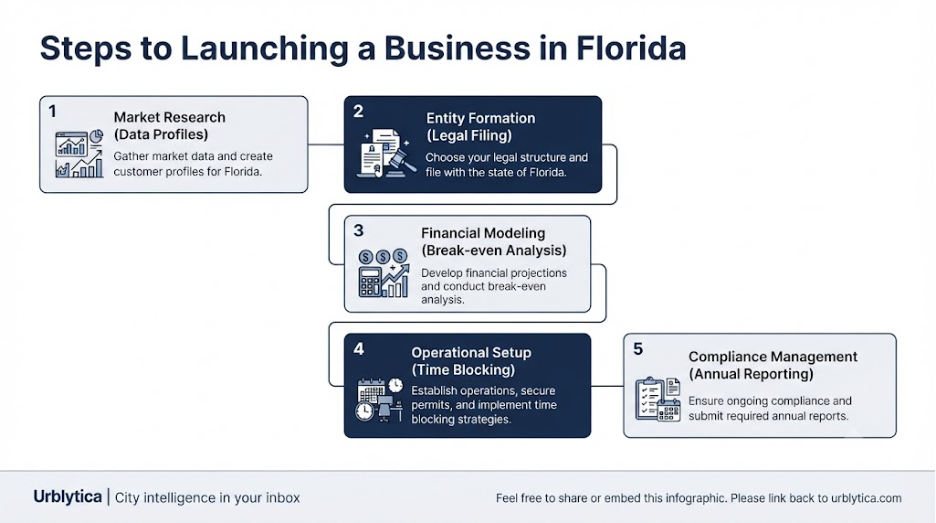
The following table outlines the operational priorities for new firms entering the Florida market in 2026, focusing on strategic implementation to ensure long term viability and competitive advantage.
|
Operational Priority |
Strategic Importance |
Implementation Focus |
Expected Outcome |
|
Market Research |
High |
City level data profiles |
Targeted expansion |
|
Entity Formation |
Critical |
Online filing services |
Regulatory compliance |
|
Financial Modeling |
High |
Break even analysis |
Sustainable growth |
|
Compliance Management |
Critical |
Annual report filing |
Good standing status |
|
Talent Acquisition |
Medium |
Localized demographics |
Skill retention |
|
Operational Efficiency |
High |
Subscription optimization |
Cost reduction |
|
Workflow Management |
Medium |
Time blocking tools |
Peak productivity |
Healthcare and Biotechnology
Florida serves as a significant hub for aging related healthcare solutions, yet the industry has moved well past simple clinical support. Today, the state is a leader in genomic medicine, telehealth, and biotechnology. Academic industry partnerships in cities such as Gainesville are producing groundbreaking research that attracts significant venture capital. For those managing the complexities of senior care, healthcare infrastructure city metrics serve as a vital resource. This data is essential for long term retention of a professional workforce. A robust healthcare system is frequently the deciding factor in business relocation intelligence studies, as firms prioritize the wellbeing of their staff and families. Furthermore, organizations often look to find senior care resources as they weigh the logistical challenges of shifting headquarters to new regions.
The Entrepreneurial Ecosystem
The sheer volume of new business formation in Florida is a testament to the state's resilience. The ease of registering a new business entity has triggered a bottom up economic surge. Small businesses are not just fueling the state's economy; they are creating the demand for professional services that support regional prosperity. Maintaining legal and financial compliance is a fundamental requirement for long term success. Many firms rely on ongoing business compliance tools to navigate the state's requirements. By staying in good standing, companies can pivot faster, scale their workforce, and take advantage of regional grants and investment programs that are often unavailable to those who do not maintain their registration properly. Entrepreneurs often utilize specialized tools to calculate business break even point scenarios, ensuring their fiscal roadmap aligns with the current market growth trajectory.
The Future: Innovation and Hybridization
The future of Florida's economy is one of diversification. As the state moves away from its historical dependence on hospitality, it is building a hybrid model that values technical expertise, operational efficiency, and global connectivity. The integration of artificial intelligence into traditional industries, such as agriculture and advanced manufacturing, is the next logical step in this evolution. For businesses looking to enter this landscape, the strategy is clear: focus on data, ensure regulatory compliance, and align your operational footprint with the fastest growing industrial corridors. By using advanced relocation intelligence tools, organizations can gain a competitive edge by identifying where talent is moving and where the capital is being deployed.
Economic growth in Florida is inherently tied to the state's ability to maintain a business friendly environment that fosters competition while providing a stable foundation for capital investment. The state's tax policy, characterized by the absence of personal income tax, remains a cornerstone of its competitive strategy. However, as the population continues to swell, the pressure on infrastructure and housing has necessitated a new phase of urban development. This is where metropolitan economic health metrics become indispensable for investors and corporate planners. By analyzing the intersection of population growth and infrastructure capacity, firms can avoid the pitfalls of market saturation.
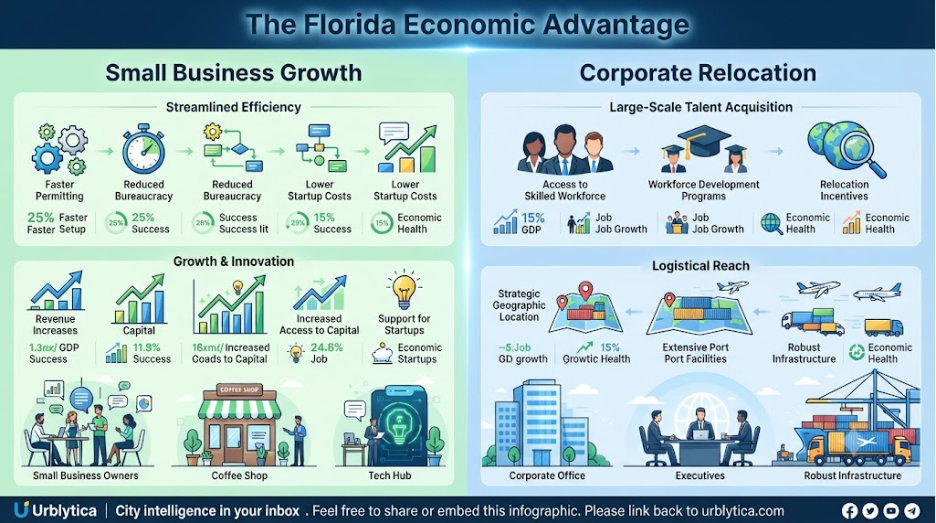
Furthermore, the integration of commercial real estate demographic reports into site selection strategy allows for granular planning. It is not enough to simply exist in a high growth region; one must occupy the space where the demographic shifts are most favorable. The current trend of exurban realignment, as highlighted in recent economic analysis reports, suggests that growth is no longer limited to the urban core. Secondary markets are proving to be resilient, offering lower overheads and a workforce that is increasingly mobile and tech savvy. For companies looking to register a new business entity, these secondary markets present an opportunity to build a brand in a less crowded, yet high potential environment.
The maritime sector, specifically in Jacksonville, serves as a testament to the power of physical infrastructure in driving modern logistics. As global trade routes reconfigure to mitigate risk, Florida ports are positioned to capture a larger share of North American imports. This activity is a catalyst for the advanced manufacturing boom in regions like Melbourne, where aerospace and defense contracts provide a stable, long term economic foundation. When these factors are coupled with the state's city business growth indicators, it becomes apparent that the next decade of growth will be defined by an even deeper integration of logistics and high tech manufacturing.
Finally, the healthcare and senior care sectors are poised for significant expansion as the demographic profile of the state evolves. The influx of retirees, combined with advancements in medical informatics, creates a unique demand for high end care facilities and precision medicine. Leveraging best cities for senior living data is now standard practice for healthcare providers who want to align their expansion with the actual needs of the population. This alignment is not just a moral imperative but a sound economic strategy, as it ensures long term operational viability in a segment that is largely resistant to typical market volatility.
Frequently Asked Questions
1. Which industry is seeing the highest annual growth in Florida?
Cybersecurity and FinTech currently share the lead, driven by the surge in digital infrastructure demand and financial services migration.
2. How has the Florida business climate changed in the last five years?
The state has transitioned from a tourism reliant economy to a diverse hub for high tech manufacturing, logistics, and professional financial services.
3. Why is the logistics industry growing so rapidly in Florida?
The expansion is driven by the state's advanced deep water ports and the necessity for global companies to decentralize supply chains closer to the Western Hemisphere.
4. Where can I find detailed economic data for specific Florida cities?
You can utilize local market intelligence data to compare city metrics and growth trends to inform your relocation or expansion plans.
5. How do I keep my business in good standing in Florida?
Businesses frequently use annual report filing services to ensure they remain in compliance with state regulations and avoid administrative penalties.
6. Is the technology sector expanding outside of Miami?
Yes, Orlando and Tampa have seen massive investment, effectively creating regional innovation hubs focused on cybersecurity and simulation technology.
7. What should be the priority when evaluating a new business location in Florida?
You should assess corporate site selection data and review the competitive landscape before making a commitment.
8. How can I manage recurring expenses in a new business setup?
Entrepreneurs often use a subscription analyzer to identify and eliminate redundant operational costs, ensuring capital is allocated to growth.
9. Are there resources specifically for family caregivers in the state?
Yes, there are many professional resources for family caregivers that help navigate the complexities of long term elder care and health management, which you can explore on the Findcarez platform.
10. What is the most effective way to schedule daily growth tasks?
Many high performing entrepreneurs use visual time management utilities to maintain focus on high impact objectives and ensure operational milestones are met.
Put Your Brand in Front of Movers & Founders
Reach a high-intent relocation and business audience across thousands of cities. Claim your space today.
View Placement Rates →