


Houston vs Dallas Population Growth: 2026 Economic Comparison
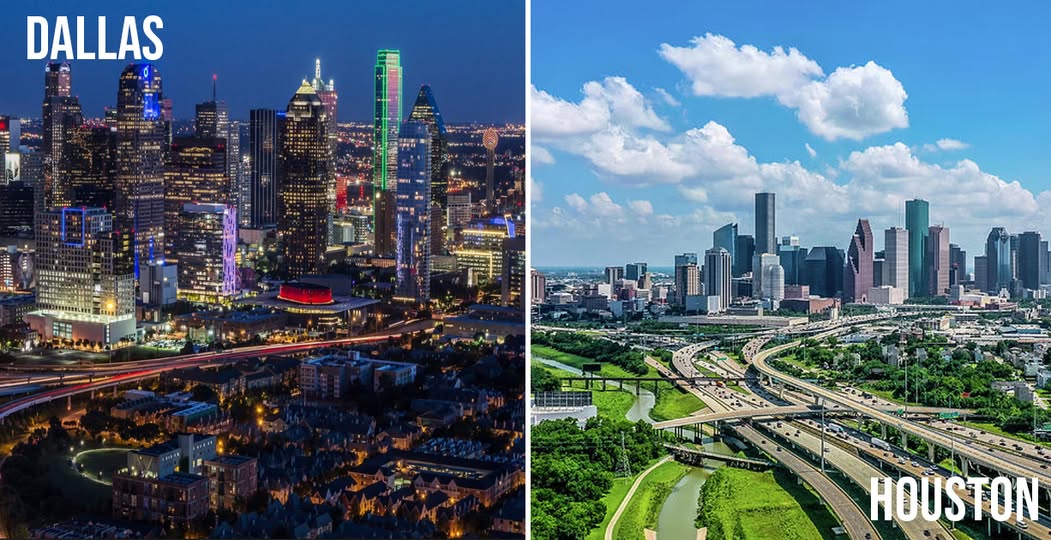
The rivalry between Houston and Dallas defines the economic narrative of Texas in 2026. As the two largest metropolitan hubs in the state, they serve as magnets for domestic migration and international capital. Both regions have experienced sustained expansion, yet the dynamics of their population growth, industrial focus, and future trajectories remain distinct. Understanding these differences is essential for investors, business owners, and families planning their next steps in the region.
Analyzing Demographic Trajectories
Population growth in Texas is a multifaceted phenomenon driven by job creation, climate appeal, and the availability of housing. Houston, known for its diverse, sprawling urban environment, has consistently attracted a wide range of demographic groups. Its growth is closely tied to its role as a global energy and logistics center. Families often use a population growth calculator to understand how these influx patterns affect local infrastructure and service demand.
Dallas, by contrast, operates as a dense corporate nexus. Its growth is characterized by the expansion of professional services, finance, and telecommunications. The Dallas Fort Worth metroplex attracts a workforce that values institutional stability and career advancement in established sectors. When individuals examine best cities for business, they frequently find that Dallas offers a more predictable upward mobility ladder, whereas Houston offers a more dynamic and culturally varied experience.
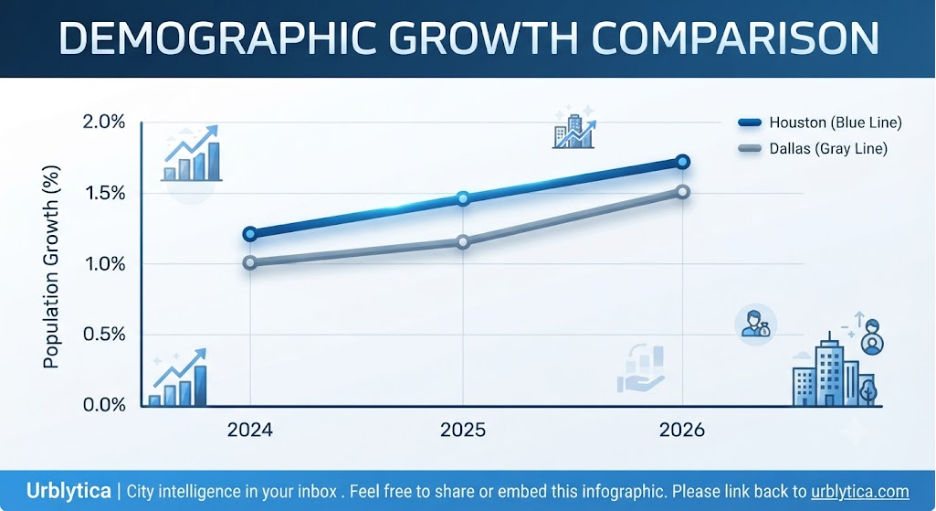
The data reveals that while both cities continue to grow, the composition of this growth differs. Houston sees a higher rate of international migration, while Dallas benefits from massive domestic migration from other major metropolitan areas. This leads to unique outcomes in urban development, school district expansion, and the need for public services. Stakeholders looking to start a business in the USA often choose their location based on which demographic base aligns better with their product or service offerings.
|
Demographic Metric |
Houston MSA |
Dallas Fort Worth MSA |
Variance Explanation |
|
Annual Growth Rate |
1.9 percent |
2.1 percent |
Dallas leads in domestic migration |
|
Median Age |
34.5 years |
35.2 years |
Houston is slightly younger |
|
Household Size |
2.8 people |
2.7 people |
Houston has higher family density |
|
Education Index |
High |
Very High |
Dallas shows higher degree attainment |
Industrial Engines of Growth
The economic bedrock of both cities determines the long term sustainability of their population increases. Houston has long been the energy capital of the world. Even as the region pivots toward the energy transition, the sheer scale of the petrochemical and research industries keeps the city at the forefront of global trade. The presence of the Port of Houston is a major factor in maintaining its logistical edge. Firms that manage complex supply chains often perform an roi audit to optimize their shipping and storage costs in the region.
Dallas maintains a different strategy. It has become a premier location for the regional headquarters of Fortune 500 companies. The finance and insurance sectors are the backbone of the economy, providing a stable foundation that survives economic downturns. For those ready to buy a business in the USA, the landscape in Dallas is often filled with established professional services firms. In comparison, Houston provides more opportunities for industrial and technical franchises. Utilizing a franchise guide is often the first step for entrepreneurs entering the Texas market.
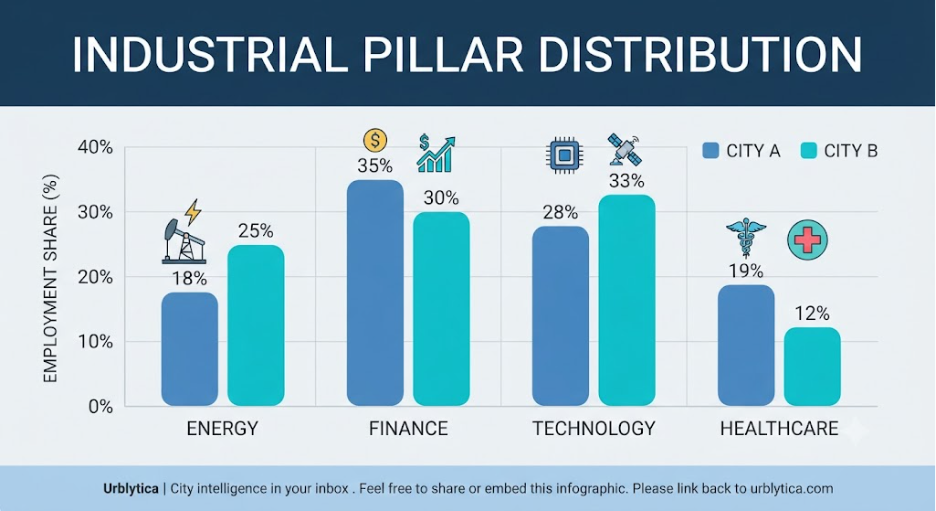
The labor force in both cities is highly mobile. However, the types of jobs they seek are different. Houston demands a mix of specialized engineering, maritime skills, and healthcare research professionals. Dallas requires a deep pool of legal, accounting, and software development talent. As the economy shifts toward 2027, this demand for specialized talent will continue to reshape the urban landscape.
|
Industry Contribution |
Houston Sector Share |
Dallas Sector Share |
Primary Driver |
|
Energy and Logistics |
24 percent |
12 percent |
Global Export Demand |
|
Finance and Insurance |
11 percent |
26 percent |
Corporate Headquarter Density |
|
Technology and Software |
10 percent |
18 percent |
Innovation Hub Expansion |
|
Healthcare and Research |
16 percent |
14 percent |
Aging Population Demand |
|
Manufacturing |
12 percent |
10 percent |
Supply Chain Integration |
Housing and Cost of Living Dynamics
Housing availability is a primary factor in population growth. Houston has benefited from a more elastic housing market. Because the city has historically faced fewer geographic constraints on development, it has managed to maintain a lower median home price compared to Dallas. This affordability has made it a preferred choice for younger families looking for their first home. For those navigating the financial complexities of this decision, using a cost of living calculator is a prudent move to ensure long term stability.
Dallas has seen a more dramatic escalation in housing prices, driven by the intense demand from high income professionals moving into the region. The city has had to innovate, shifting toward high density, vertical developments to accommodate the population influx. This trend is often analyzed in the context of best cities for growth. The rising costs in Dallas have forced many residents to move further into the exurbs, creating a significant reliance on regional highway connectivity.
For individuals looking at their personal finances, the decision to rent versus buy becomes critical. Many residents use an online mortgage calculator to determine their monthly exposure. While Dallas may have a higher cost of entry, the potential for long term equity growth remains a strong incentive. Houston remains a better market for those who prioritize immediate affordability and larger square footage.
Infrastructure and Connectivity
Infrastructure serves as a circulatory system for both cities. Houston is a city built on the automobile, with a massive freeway network that connects its far reaching suburban zones to the urban core. The city is currently investing heavily in flood mitigation and the expansion of its port terminals to handle increased global volume. Proper logistical management in Houston often involves bulk address cleaner usage to maintain accurate supply chain data.
Dallas has focused its infrastructure efforts on aviation and regional connectivity. The proximity of Dallas Fort Worth International Airport to the rest of the nation makes it a hub for domestic trade. Furthermore, the DFW area has made strides to expand its light rail system. For project managers in the region, time management tools have become essential to navigate the traffic that accompanies such rapid expansion.
The digital infrastructure in both cities is high performing, which has allowed for the rise of remote work hubs. This is a critical factor for the tech heavy suburbs of Dallas and the healthcare focused zones of Houston. As organizations plan their site selection, they look for regions that can provide fiber optic redundancy and power grid stability.
Business Environment and Incorporation
The regulatory climate in Texas is a massive draw for both cities. The lack of individual income tax is a primary motivator for migration. However, the ease of starting a business can vary based on local support networks. In Dallas, the emphasis is on corporate scaling. Founders in the city often lean on professional business services to handle their legal and tax compliance. This allows them to focus on securing investment and expanding their market share.
In Houston, the entrepreneurial spirit is often seen in the industrial and medical sectors. Startups in the healthcare space, particularly those surrounding the Texas Medical Center, rely on specialized incubators. Entrepreneurs often utilize business formation tools to ensure their company structure meets state requirements from the very first day. The ability to pivot and adapt to new market demands is highly valued in both cities.
When looking at the startup ecosystem, Dallas appears to have a slight edge in terms of venture capital for tech and software. Houston dominates early stage funding for energy, space, and medical ventures. Depending on the industry, one city will naturally offer a more favorable environment. Founders should check business guides before finalizing their incorporation strategy.
Healthcare and Aging Populations
As the population matures, the demand for senior care infrastructure becomes a defining economic factor. Both cities are home to massive healthcare systems, but they are serving different needs. Houston is a destination for medical tourism and specialized clinical research. This creates a high demand for health care services that integrate with these advanced medical networks.
Dallas has focused on the quality of life for the elderly, with a high density of luxury independent living communities and comprehensive elder law support. Families looking to manage these transitions often seek elder law advice to protect their assets and ensure proper care. The aging population in Texas is expected to grow significantly by 2030, which will necessitate even more investment in assisted living support and home based care models.
The availability of information is key for families. Directories that allow residents to search for caregivers have become vital resources. As the population grows, the efficiency of these care networks will determine the overall satisfaction of the aging demographic in both cities.
|
Healthcare Service |
Houston Availability |
Dallas Availability |
Primary Benefit |
|
Clinical Research |
Very High |
High |
Cutting edge Treatment |
|
Long term Nursing |
High |
High |
Chronic Care Support |
|
Assisted Living |
Moderate |
High |
Lifestyle and Support |
|
Home Health Services |
High |
Moderate |
Personalized Care |
|
Elder Law Resources |
Moderate |
High |
Asset Protection |
Outlook 2026 and Beyond
The competition between Houston and Dallas will only intensify. As we move through 2026, both cities are evolving. Dallas is becoming a more complete, tech savvy metropolitan giant, while Houston is reinventing itself as a leader in the global energy transition. For residents, the choice between the two is a choice between two distinct ways of life.
The key to success for both cities will be their ability to manage the strain of growth. Water management in Houston and traffic density in Dallas are the primary challenges that must be addressed to sustain the current pace of migration. Investors should continue to monitor these developments. Whether one decides to buy a business or simply relocate for a new career, the Texas market provides unparalleled opportunity.
The data suggests that both regions will remain the primary drivers of the state economy. By integrating advanced technology, maintaining a pro business regulatory framework, and investing in human capital, both Houston and Dallas are well positioned to maintain their status as the fastest growing hubs in the country.
Frequently Asked Questions
1. Which city offers more affordable housing, Houston or Dallas?
Houston generally offers a more affordable housing market with larger lot sizes, making it more accessible for first time homebuyers compared to the faster appreciating market in Dallas.
2. How does the economy of Houston differ from Dallas?
Houston is anchored by energy, shipping, and healthcare research, whereas Dallas is a diversified corporate hub focused on finance, telecommunications, and professional services.
3. Which city has a larger international population?
Houston is consistently ranked as one of the most diverse cities in the United States, with a high rate of international migration that influences its culture and business sectors.
4. Is it easier to start a business in Dallas or Houston?
Both cities benefit from the Texas state's business environment. Dallas offers a deep network of corporate partnerships, while Houston provides a specialized ecosystem for industrial and medical startups.
5. How do these cities support the aging population?
Both cities have robust healthcare sectors. Houston excels in clinical research and high level medical care, while Dallas has a dense infrastructure of high end assisted living and elder support services.
6. What infrastructure challenges are these cities facing?
Houston is primarily focused on flood mitigation and port expansion. Dallas is prioritizing its airport capacity, light rail expansion, and highway traffic management.
7. Which city is better for tech career advancement?
Dallas has a more established and diverse tech sector, including a strong presence in telecommunications and software development, which often provides more opportunities for career growth.
8. How can I compare the cost of living between the two?
Prospective residents should use an online salary calculator to input their specific income and lifestyle requirements to get a localized estimate for each metro area.
9. What is the role of the Texas Medical Center in Houston for growth?
The Texas Medical Center is a massive employer and a source of innovation that drives demand for housing, services, and commercial real estate in the urban core.
10. Are there resources to help me relocate my business to Texas?
Yes, entrepreneurs can access corporate relocation intelligence and local economic profiles to evaluate the market viability for their specific industry before making a move.
Put Your Brand in Front of Movers & Founders
Reach a high-intent relocation and business audience across thousands of cities. Claim your space today.
View Placement Rates →