


Nashville Economic Profile 2026: Demographics & Business Growth

Nashville enters 2026 as a premier hub for sustainable urban expansion and economic diversification. Often recognized for its rich musical heritage, the city has evolved into a powerhouse of healthcare innovation, advanced manufacturing, and technology integration. As the capital of Tennessee, it remains a focal point for organizations seeking a pro business environment and a highly skilled workforce. For those tracking the region, accessing regional business climate analysis provides the necessary context for strategic investment. The city continues to draw residents and enterprises alike, driven by its strategic location and a regulatory framework that prioritizes long term capital stability.
Analyzing Nashville Demographics
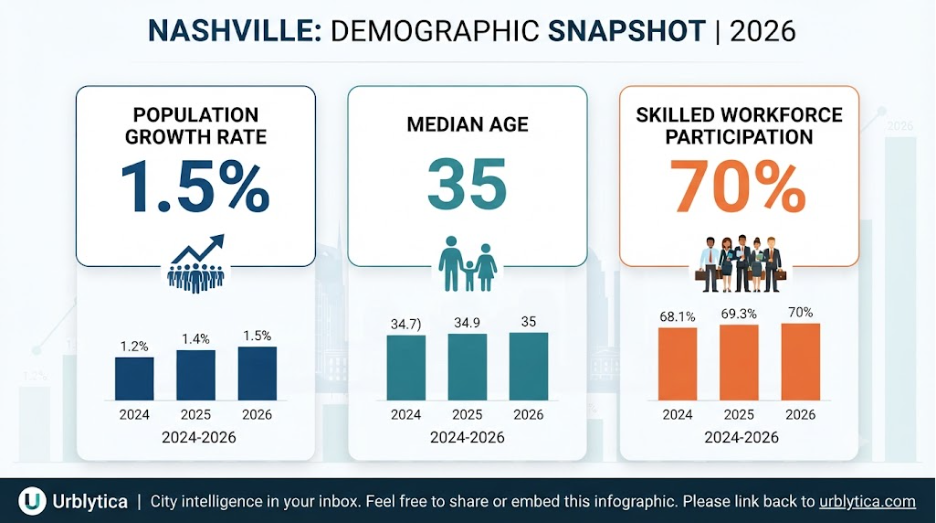
Understanding the current landscape requires a deep dive into local population dynamics. Nashville demographics have shifted toward a more cosmopolitan and professional profile over the last several years. Recent census data indicates a population that is increasingly young, educated, and culturally diverse. This demographic shift serves as a significant economic asset, fueling a vibrant service economy and facilitating connections to broader national markets.
The age distribution within the metropolitan area has moved toward younger professional cohorts, primarily driven by the growth of technology sectors and the expansion of major healthcare systems. This influx of talent necessitates accurate city level economic data profiles for businesses looking to leverage human capital. The population density continues to push outward toward suburban rings, where developers are balancing housing demand with transit oriented infrastructure. When examining the potential for expansion, many organizations utilize local market intelligence data to ensure their site selection aligns with population density shifts.
The following table provides a breakdown of the demographic trends that have defined the Nashville MSA over the last two years.
|
Demographic Segment |
Population Share |
Growth Trend 2024 2026 |
Economic Impact |
|
Young Professionals 25 to 34 |
24 percent |
+4.5 percent |
High Consumer Spend |
|
Skilled Workforce Participation |
70 percent |
+3.0 percent |
Increased Productivity |
|
International Migration |
12 percent |
+2.8 percent |
Cultural and Trade Links |
|
Senior Demographic 65 plus |
13 percent |
+2.2 percent |
Healthcare Demand |
As seen in the data above, the city is experiencing a sustained influx of talent. Businesses must recognize that regional market viability data is essential when planning long term operations in these shifting neighborhoods. Furthermore, families often prioritize family friendly city metrics when selecting new communities within the metropolitan area.
The Pillars of the Nashville Economy
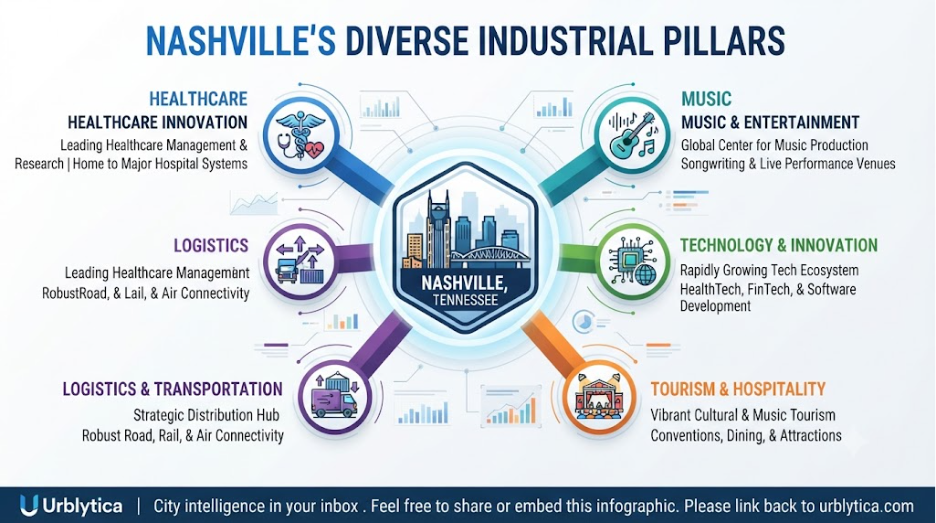
The economic strength of Nashville is not derived from a single source. Instead, it relies on a multi faceted industrial structure that provides a buffer against cyclical downturns in specific markets.
Healthcare and Biotechnology
Nashville maintains its position as a global leader in clinical research and patient care. Its ongoing expansion is a major driver for both high skilled employment and commercial real estate development. The integration of health tech startups within the urban core has transformed neighborhoods that previously lacked institutional investment. For those navigating the complexities of entering this sector, it is helpful to evaluate a business for sale to understand the competitive landscape before committing to new infrastructure. Furthermore, as the local population ages, the demand for specialized facilities continues to grow, making best cities for senior living data a vital asset for healthcare investors. Those managing these transitions often need to find senior care resources ensure their personnel and families have adequate support systems.
Music and Entertainment
While healthcare drives volume, the music and entertainment industry defines the cultural economy. Nashville remains at the heart of the national industry, supporting thousands of ancillary jobs in the legal, marketing, and hospitality sectors. The city has successfully leveraged its brand to attract tourism, but more importantly, to anchor a creative class that sustains local business growth. For entrepreneurs looking to start an LLC online, the creative sector offers a unique blend of established industry giants and agile startups.
Logistics and Technology
As a regional logistics hub, Nashville leverages its proximity to major interstate corridors and its status as a distribution center for the southeast. The expansion of automated warehousing and the refinement of regional supply chains have solidified the city as a gateway for domestic trade. Organizations often rely on business relocation intelligence when selecting sites that offer proximity to major transportation arteries. To optimize these logistical operations, firms frequently need to clean unformatted mailing lists ensure their supply chain communications remain accurate and efficient.
Table 2: Industry Pillar Contributions
|
Industry Pillar |
Employment Share |
Primary Focus |
Economic Contribution |
|
Healthcare and Life Sciences |
20 percent |
Clinical and Research |
High |
|
Tourism and Hospitality |
18 percent |
Services and Events |
Moderate |
|
Professional Services |
16 percent |
Finance and Legal |
High |
|
Logistics and Distribution |
12 percent |
Import and Export |
High |
|
Technology and Software |
10 percent |
Industrial and Software |
Moderate |
Business Climate and Growth Projections
The business environment in Nashville for 2026 is defined by a focus on sustainable growth. The city has seen a consistent increase in new business filings, suggesting that the local entrepreneurial spirit remains strong. Many founders are choosing to register a new business entity to streamline their entry into this high growth market.
The municipal tax structure, combined with the lack of state level income tax, continues to make the region highly attractive for municipal tax and economic data analysis. While inflation and supply chain pressures remain part of the broader macroeconomic conversation, Nashville companies have generally been effective at managing overhead costs. Businesses that effectively calculate business break even point are better positioned to weather the fluctuations of the current cycle. Additionally, managing recurring costs is essential, and many firms now audit enterprise SaaS subscription spending to ensure their digital overhead does not erode their margins.
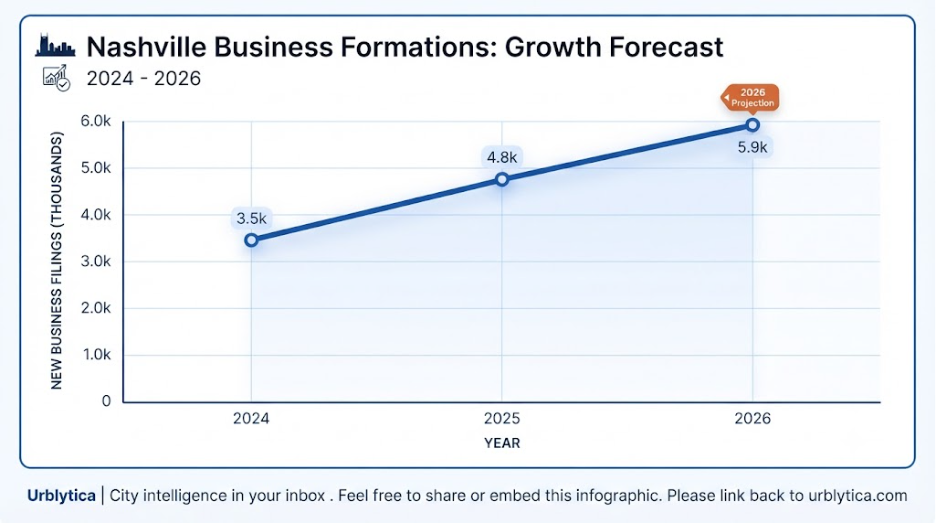
Table 3: Economic Indicators for Nashville MSA
|
Economic Indicator |
Nashville MSA Value |
National Average |
Growth Outlook |
|
GDP Growth |
3.5 percent |
2.1 percent |
Positive |
|
Employment Rate |
97.0 percent |
95.8 percent |
Stable |
|
Business Startups |
High |
Moderate |
Increasing |
|
Median Home Price |
Moderate |
High |
Competitive |
Strategic Infrastructure and Regional Connectivity
Infrastructure investment is the silent engine behind Nashville growth. The ongoing expansion of transit systems, combined with a renewed focus on regional connectivity, is essential for maintaining the city's competitive edge. When firms look to establish new operations, they must verify their logistical connectivity using reliable data. Using a bulk address cleaner is often a first step for firms preparing their distribution databases. Proper address maintenance is essential for large scale operations.
Technology integration is another frontier. The rise of digital management tools for teams, such as using a universal time blocker day planner, has become standard for project managers operating in the fast paced Nashville logistics and construction sectors. This increased productivity is directly reflected in the output of the local economy. For those managing remote teams, it is critical to optimize daily calendar scheduling to maintain high output environments.
Table 4: Infrastructure Project Status
|
Infrastructure Project |
Completion Status |
Regional Impact |
|
Transit Corridor Expansion |
70 percent |
Reduced Commute |
|
Industrial Zone Development |
80 percent |
Job Creation |
|
Flood Mitigation Systems |
65 percent |
Asset Protection |
|
High Speed Data Grid |
95 percent |
Tech Support |
Outlook and Challenges
The outlook for Nashville in 2026 remains bullish, though it is not without challenges. The city must continue to invest in sustainable development to protect its growing population and economic assets. Furthermore, as the workforce becomes increasingly digitized, the demand for high speed connectivity and data security will only grow.
Companies looking to relocate to Nashville should consider the broader ecosystem. From checking retiree cost of living indexes to evaluating municipal tax and economic data, the planning phase is as critical as the final move. The region offers a robust support network for new entrants, provided they conduct proper due diligence before finalizing their expansion plans. Entrepreneurs are encouraged to incorporate their business online through official channels to ensure full compliance with regional statutes.
One significant shift in the 2026 landscape is the integration of AI driven business tools. Teams are increasingly looking to clean prompts for security compliance before automating their internal workflows. This technical rigor ensures that the rapid growth seen in the Nashville tech sector is matched by operational security. As the city continues to climb in the best cities for startups rankings, the integration of these tools will likely become a competitive differentiator for new market entrants.
Frequently Asked Questions
1. What are the primary growth industries in Nashville for 2026?
The primary growth industries include healthcare, biotechnology, music production, advanced manufacturing, and logistics. Each of these sectors is supported by a large and highly specialized workforce.
2. How do Nashville demographics influence local business strategy?
The diversity of the population allows businesses to access diverse markets more easily and provides a deep talent pool across multiple sectors. Understanding these metrics is vital for targeted marketing and service deployment.
3. Why is Nashville considered a top destination for corporate relocation?
The combination of a favorable tax environment, a moderate cost of living compared to other major coastal cities, and a strategic geographic location makes it highly attractive for growing corporations.
4. How does the healthcare industry affect the Nashville labor market?
The healthcare industry is creating demand for new skill sets in health tech, patient services, and research management, leading to significant job growth across the metropolitan area.
5. What is the current outlook for the Nashville housing market?
The market remains competitive due to steady population growth, though the development of suburban areas has helped to maintain a more balanced supply and demand dynamic than in previous years.
6. Is there a strong support network for new small businesses in Nashville?
Yes, the city offers numerous resources, including incubators, business chambers, and a professional business registration platform that makes it easy to manage compliance.
7. How does regional connectivity impact economic health?
Improved transit and logistics connectivity facilitates trade, reduces operational costs for businesses, and expands the labor pool by connecting outlying residential areas to the urban core.
8. What infrastructure challenges is the city currently addressing?
The city is actively investing in flood mitigation, transit expansion, and digital infrastructure to accommodate the growing population and increase overall operational efficiency.
9. How can businesses evaluate the local labor force?
Companies can use various public and private data sets, including census reports and local market intelligence data to assess skill availability and wage requirements.
10. What advice would you give to a startup moving to Nashville?
Conduct thorough market research, leverage local business networks, and ensure that your administrative foundation, such as your entity filings, is handled through professional services to avoid future compliance issues.
Put Your Brand in Front of Movers & Founders
Reach a high-intent relocation and business audience across thousands of cities. Claim your space today.
View Placement Rates →