


Healthcare Employment Growth by State

The United States healthcare sector is currently navigating an era of unprecedented workforce expansion and structural transformation across all fifty states. As the national demographic tide shifts steadily toward an aging population, the overarching demand for clinical professionals, administrative specialists, and specialized medical technicians has surged far beyond traditional macroeconomic projections. This remarkable growth is not uniform across the country, as regional labor market dynamics vary significantly from state to state, influenced heavily by state level healthcare policy, local education infrastructure, and distinct geographic migration patterns. Understanding the core drivers of this expansion is essential for strategic stakeholders, ranging from clinical providers and human resources executives to public policymakers and academic institutions seeking to align educational pipelines with actual labor needs.
The Macro Economic Drivers of Healthcare Hiring
The healthcare industry has emerged as the single most reliable engine of job creation within the contemporary United States economy. This structural phenomenon is largely attributed to the sustained increase in life expectancy among the baby boomer generation and the subsequent exponential demand for chronic disease management and long term care coordination. When we evaluate the broader landscape for senior care intelligence, we see that states experiencing the most robust growth are those that have successfully balanced advanced technological integration with traditional labor intensive care delivery models. This ongoing shift requires a continuous, high volume influx of specialized clinical talent to maintain operational continuity and high standards of patient safety.
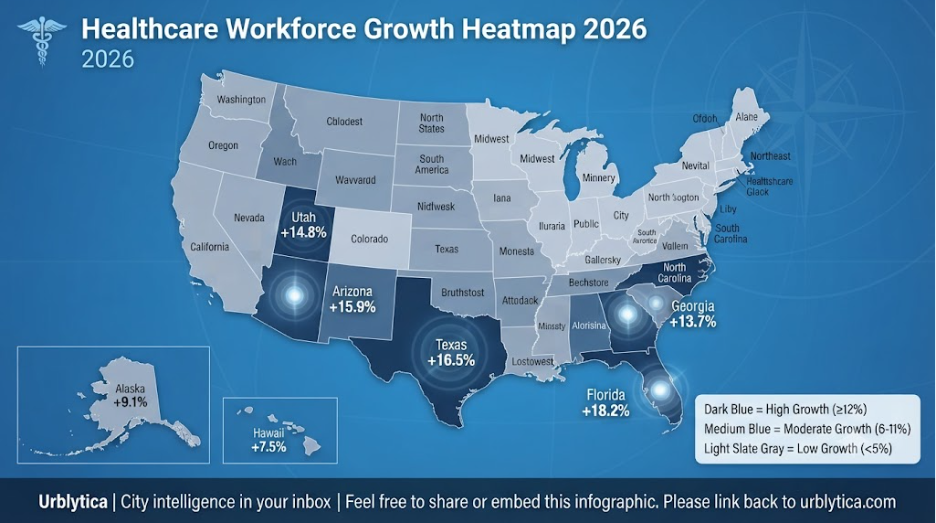
Labor market analysts frequently examine rankings and categories to determine which states possess the internal economic and institutional capacity to handle this surging demand. A primary factor in this equation is the density and availability of academic health centers, which serve simultaneously as rigorous training grounds and massive anchor institutions for regional medical ecosystems. In states like Texas and Florida, the unique convergence of favorable population migration patterns and a supportive regulatory environment have created a fertile economic climate where clinical roles are being generated at a velocity that consistently outpaces almost every other commercial sector.
|
State / Region |
Estimated Annual Hiring Velocity |
Primary Clinical Focus Area |
Institutional Readiness Index |
|
Florida |
5.2% |
Geriatric and Long term |
High |
|
Texas |
4.8% |
General Practice |
Very High |
|
Arizona |
4.5% |
Specialty Clinics |
Moderate |
|
North Carolina |
4.2% |
Biotechnology |
High |
|
Georgia |
4.0% |
Managed Care |
Moderate |
|
Colorado |
3.8% |
Preventative Wellness |
Moderate |
|
Nevada |
3.5% |
Retail and Urgent Care |
Low |
|
Tennessee |
3.2% |
Regional Acute Care |
High |
Regional Variations in Clinical Workforce Demand
To truly comprehend the trajectory of modern health employment, one must dissect the complex regional variances that define the national landscape. The American South and the Mountain West are currently demonstrating the most aggressive workforce expansion metrics in the country. These specific regions have become powerful magnets for both retiring populations and ambitious healthcare providers, creating a self sustaining cycle of economic growth that requires ongoing, multibillion dollar investments in physical, digital, and administrative infrastructure. When healthcare organizations assess the best path forward for expansion, they frequently rely on best cities for business data to determine precisely where to establish new clinical facilities, regional offices, or specialized outpatient centers.
The structural demand for nurses, medical assistants, and administrative personnel varies drastically depending on whether a state caters primarily to retirement hubs or growing family demographics. For instance, states characterized by high influxes of retirees demand a heavier concentration of home health aides and physical therapists, whereas fast growing urban centers in the Sunbelt require diverse pediatric, emergency, and surgical teams. This geographic divergence dictates how hospital systems budget for recruitment, retention, and competitive compensation packages across state borders.
The Impact of Specialized Training and Certifications
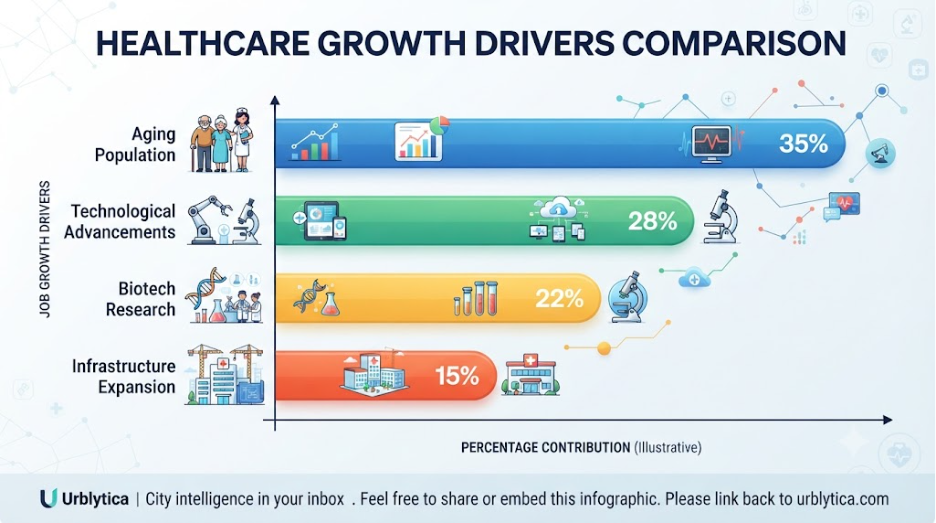
A massive catalyst behind the current nationwide hiring surge is the increased emphasis on professional specialization and verified credentials. States that invest heavily in caregiver certifications are reporting significantly higher workplace satisfaction levels and lower turnover rates among frontline staff. These structured educational programs provide a clear, standardized career advancement path, which often serves as the decisive factor for qualified professionals choosing between competing healthcare employers. For the individual practitioner, the ability to showcase verified skills through recognized professional directories represents a major competitive advantage in a tight labor market. Professionals who actively maintain their caregiver career info and certifications routinely command higher starting salaries and enjoy vastly superior job security. This rigorous standardization is far from just beneficial for the employee; it functions as an essential risk management tool for the healthcare employer, ensuring that all clinical staff meet strict state and federal regulatory benchmarks.
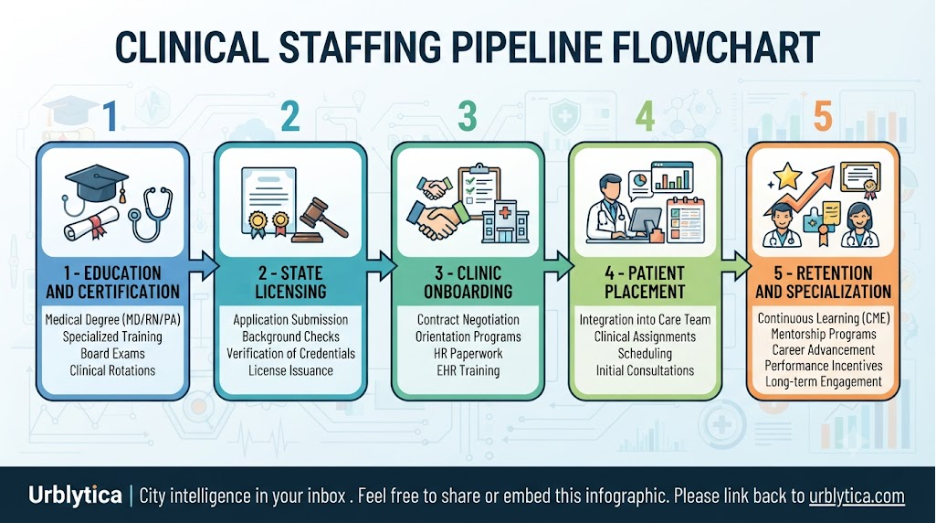
Furthermore, educational institutions are partnering directly with hospital conglomerates to fast track clinical training programs. This collaboration helps bridge the gap between graduation and active employment, minimizing the time it takes for new nurses and technicians to enter active rotation. As hospitals face mounting patient loads, the efficiency of this talent pipeline directly influences a facility's ability to maintain high service standards without burning out existing personnel.
Technology as an Accelerator for Administrative Efficiency
The integration of modern digital technology has rapidly become a cornerstone of sustainable operational growth in healthcare staffing. With the administrative burden of clinical work rising due to complex billing and electronic health record requirements, institutions are turning to sophisticated digital solutions to optimize human output. By leveraging insights and economic analysis, clinic administrators can accurately identify systemic bottlenecks in their daily workflows and implement software solutions that drastically reduce the time practitioners spend on tedious documentation.
This digital evolution is not merely about reducing overhead expenses; it is fundamentally about human retention. Providing clinical staff with modern tools that simplify routine scheduling and chart entry is a critical component of the retention strategies deployed by top performing health systems. For entrepreneurial groups looking to business formation entities for specialized diagnostic or therapeutic services, ensuring that the technology infrastructure is fully integrated from day one is essential for scaling operations effectively in highly competitive markets.
|
Operational Metric |
Industry Target Goal |
Primary Implementation Tool |
Significance for Health Systems |
|
Staff Retention Rate |
93% |
Mentorship Platforms |
Ensures Institutional Stability |
|
Average Time to Fill |
40 Days |
Automated ATS Systems |
Maintains Resource Continuity |
|
Total Cost per Hire |
$5,000 |
Predictive Budgeting Software |
Protects Overall Financial Health |
|
Annual Training Load |
90 Hours |
Certification Tracking Tracks |
Guarantees High Clinical Quality |
|
Nurse to Patient Ratio |
1:12 |
Dynamic Scheduling Software |
Upholds Rigorous Service Standards |
|
Core System Uptime |
99.9% |
Cloud Analytics Dashboards |
Preserves Seamless Operational Flow |
|
Average Revenue/Bed |
$2,500 |
Financial Analytics Suites |
Maximizes Capital Efficiency |
Workforce Realignment and Economic Health
As the ongoing demand for quality care increases across all regions, states find themselves competing intensely to attract and retain the best medical talent available. This fierce competition has led to significant, upward shifts in compensation models and professional development offerings. When recruiting top tier specialists, human resource departments frequently utilize a salary calculator to maintain strict parity with rising local costs of living and aggressive competitor offers. This delicate balancing act is crucial for long term survival in an industry where employee burnout and staff turnover remain at persistent operational risks.
Moreover, broad economic shifts are compelling healthcare providers to reexamine their geographic footprint. Using specialized relocation cost calculator utilities allows hospital leadership teams to predict accurately where the next generation of patients will originate, thereby allowing them to deploy capital and medical resources more effectively. The intricate synergy between regional workforce supply and actual clinical demand remains perhaps the most delicate aspect of successfully managing a modern health system in a volatile economic climate.
Benchmarks for Operational Success in Clinical Hiring
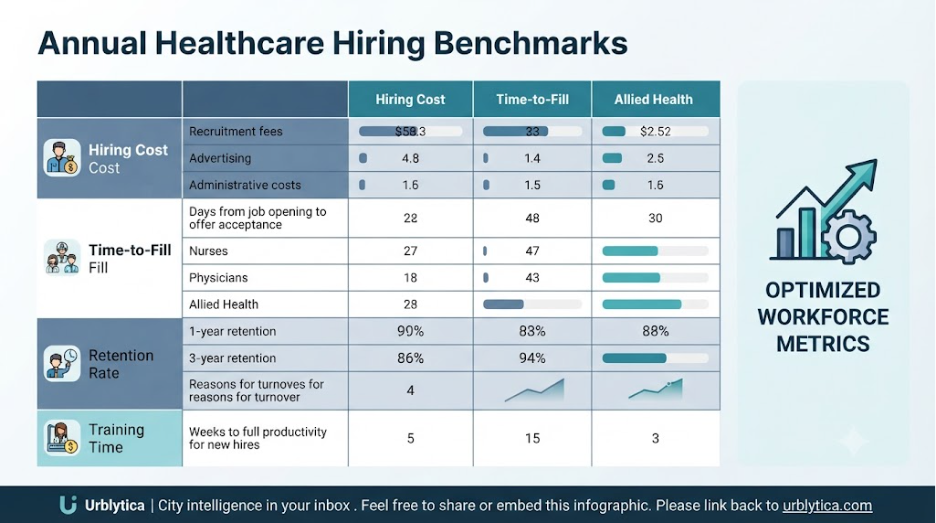
Efficiency is the absolute name of the game in today's tight labor market. Healthcare executives must monitor specific operational benchmarks to ensure their organizations remain competitive. The table above outlines the key performance indicators that institutions should target when scaling their internal teams. These targets represent the recognized industry standard for maintaining clinical productivity while ensuring uncompromising quality of care. Meeting these operational benchmarks requires continuous oversight and a willingness to adopt automated administrative tools that streamline hiring workflows.
Managing the Intersection of Growth and Compliance
Expansion within the healthcare sector is rarely a smooth, frictionless process. Regulatory hurdles are a constant reality, and the organizational ability to maintain strict compliance is a core competency for any growing provider. When evaluating best cities for growth, corporate stakeholders frequently discover that the most attractive regions for expansion are those where the legal framework governing healthcare operations are transparent, stable, and predictable.
Organizations often look to senior care usa resources as they weigh the logistical complexities of shifting corporate headquarters or opening new satellite clinics across unfamiliar state lines. The intricate interaction between local zoning laws, state medical board licensure requirements, and federal health standards creates a remarkably complex regulatory environment. Those providers who succeed are almost universally the ones who utilize professional corporate services to ensure they remain in business formation compliance with all necessary state and federal authorities.
Outlook: Technology, Demographics, and Care Delivery
The coming decade will undoubtedly be defined by the further hybridization of clinical workflows and administrative automation. As artificial intelligence and machine learning technologies become more deeply integrated into diagnostic imaging and appointment scheduling processes, the nature of the roles available in the healthcare sector will continue to shift. We expect to see a substantial increase in demand for hybrid professionals who possess both technical digital aptitude and deep clinical empathy.
Furthermore, the ongoing trend of exurban realignment, as discussed in detail within top 100 fastest growing cities, suggests that the future of healthcare delivery will be significantly more decentralized. Smaller, agile boutique facilities that cater specifically to local demographic clusters are likely to experience much faster growth than massive, centralized hospital networks. This structural shift creates a unique opportunity for nimble entrepreneurial firms to start a business and successfully fill critical care gaps in underserved suburban and exurban markets.
Comprehensive Economic Context for Modern Healthcare
To understand the broader implications of these workforce trends, we must compare regional healthcare growth directly against broader national economic indicators. Cities experiencing strongest economic growth are not merely expanding their manufacturing or technology sectors; they are actively investing in massive healthcare corridors. For instance, the dallas economic profile clearly indicates that healthcare acts as a top three employer in the metropolitan area, driven heavily by a surge in private insurance demand and continuous hospital network expansion. Similarly, the houston economic profile demonstrate that specialized medicine and biomedical research serve as core economic drivers for both international medical tourism and regional specialized patient care.
When analyzing regional competition, such as the dynamics outlined in nashville vs charlotte, it becomes blatantly evident that healthcare staffing is a critical strategic asset. Cities that successfully lower their local cost of living are demonstrably more successful at attracting and retaining nursing talent, which remains a massive differentiator for health systems aiming to keep operational costs under tight control.
Frequently Asked Questions
1. Which state currently leads the nation to overall healthcare employment growth?
Florida currently sees the highest growth rate due to a massive, ongoing influx of retirees requiring specialized geriatric support and long term care services.
2. How do healthcare caregivers verify their professional credentials in high growth states?
Caregivers frequently utilize state specific licensing portals or verified national directories to manage their credentials and ensure professional mobility across different regional jurisdictions.
3. Why is modern technology becoming so critical for clinical staffing firms?
Technology successfully reduces administrative burnout by automating repetitive tasks, allowing medical professionals to focus heavily on direct patient interaction and care delivery.
4. Where can administrators compare local employment metrics for healthcare providers?
Using specialized regional databases allows executives to compare different urban centers side by side to assess local market viability and infrastructure readiness.
5. What exactly role does the aging population play in current job creation?
The aging population exponentially increases the demand for specialized long term care facilities and home based support services, effectively creating thousands of new roles annually.
6. Is clinical research considered a major growth sector for healthcare employees?
Yes, states with strong academic ties to major universities are seeing rapid expansion in biotechnology and genomic medicine trials, driving the need for specialized staff.
7. How do entrepreneurs calculate the projected profitability of a new healthcare clinic?
Entrepreneurs frequently use a specialized break even calculator to map fixed and variable expenses against projected patient volume.
8. What is the primary benefit of obtaining specialized senior care certifications?
Certifications provide standardized proof of professional skill, which serves as a strict prerequisite for higher paying positions in clinical and residential care settings.
9. How are regional clinics responding to the ongoing nationwide nursing shortage?
Clinics are actively responding by offering flexible scheduling models, improved comprehensive benefits packages, and generous retention bonuses to keep top talent.
10. Where can families find reliable resources for long term senior care options?
Families frequently utilize centralized professional platforms when transitioning a loved one into a high quality professional care facility, such as those found at findseniorsliving.com.
Put Your Brand in Front of Movers & Founders
Reach a high-intent relocation and business audience across thousands of cities. Claim your space today.
View Placement Rates →