Top Cities by Investment Attractiveness: A Definitive Economic Analysis 2026


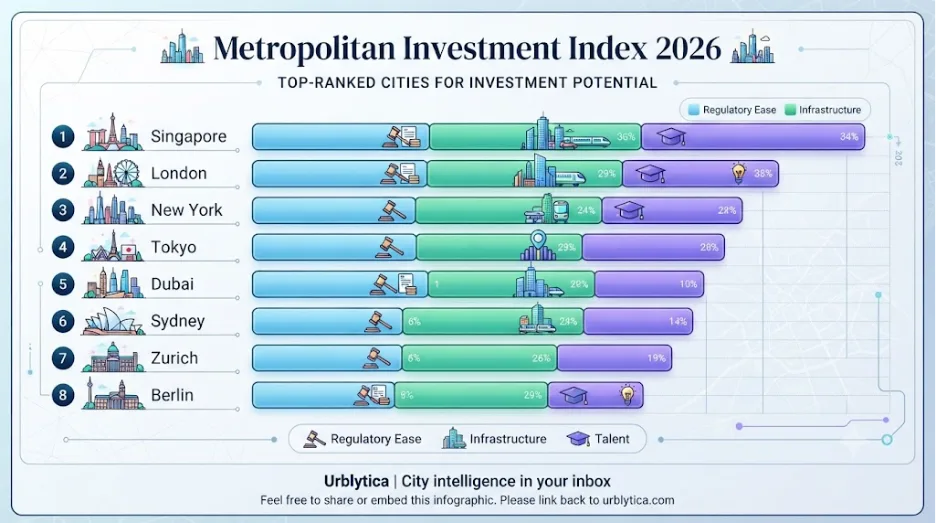
The structural landscape of the American economy is undergoing a permanent transformation. As we navigate the complexities of 2026, the criteria used by enterprise leadership teams to evaluate site selection have evolved from simple costminimization models to complex frameworks of resilience, talent density, and institutional agility. Investment attractiveness is no longer merely a snapshot of tax rates; it is a multidimensional metric that reflects a city's capacity to sustain highgrowth operations in an era of global supply chain volatility and rapid technological disruption.
Investment attractiveness now prioritizes resilience, talent, and institutional agility over simple cost minimization. Successful cities offer stable regulatory frameworks, strong infrastructure, and elastic labor markets, with the Sunbelt emerging as a key growth region. This shift favors mid-sized cities that align public and private sector needs for long-term capital intensity.
The Evolution of Metropolitan Economic Competitiveness
In previous decades, geographic expansion was often dictated by historical inertia or the presence of traditional manufacturing hubs. Today, the best cities for business are those that have successfully curated an ecosystem where administrative friction is minimized and innovation is incentivized. Enterprises now prioritize institutional stability, which includes the predictability of regulatory frameworks and the availability of specialized labor pipelines. When an organization decides to start a business in a new metropolitan area, the decision is increasingly driven by the databacked assurance that the city can support the longterm capital intensity required for modern scaling.
The shift toward decentralized growth is perhaps the most significant trend of this decade. As firms look to hedge against the risks of hypercentralized hubs, they are finding that midsized cities offer a compelling alternative. By leveraginginsights and economic analysis, leadership teams can identify regions where the alignment of public sector investment and private industry requirements is at its strongest. This synergy is the hallmark of the topperforming cities in our 2026 index.
Institutional Infrastructure and Labor Market Elasticity
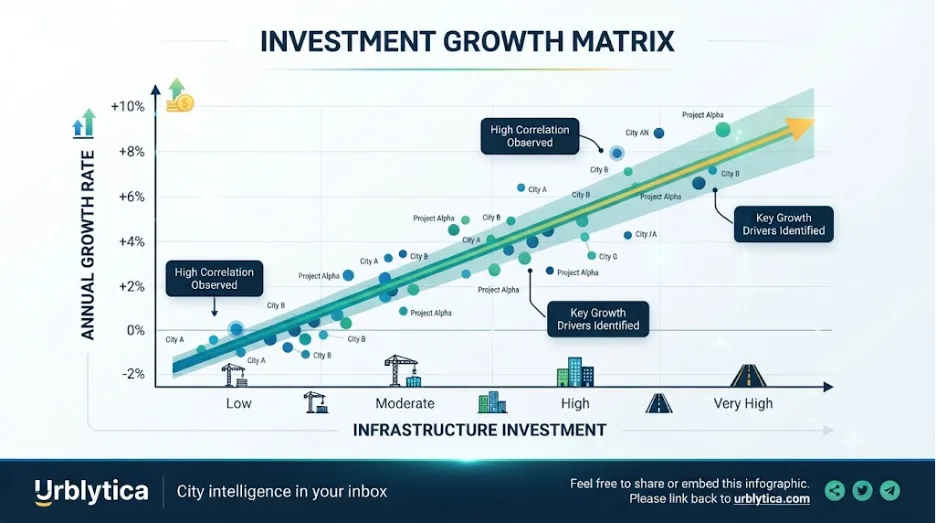
The sustainability of a business climate depends heavily on the robustness of local infrastructure. This includes physical networks, such as logistics and power grids, as well as soft infrastructure, including vocational training centers and research corridors. A city with a high attractiveness score typically demonstrates a sophisticated understanding of how these assets interact. For instance, cities that have invested in best cities for startups environments are finding that they attract not just capital, but the hightech talent necessary to drive the next generation of industrial innovation.
Labor market elasticity refers to a region's ability to adjust to shifting workforce demands without causing inflationary pressure on wages. The most successful cities have cultivated deep partnerships between industry and educational institutions, ensuring a constant stream of graduates who are ready to hit the ground running. This reduces the timetofill critical roles and ensures that firms can scale their operations at a velocity that matches their market opportunity. The salary calculator has become a primary tool for executives who want to remain competitive in these highgrowth environments while managing their total cost of labor effectively.
Regional Clustering and the Sunbelt Renaissance
The Sunbelt has solidified its position as the primary engine of demographic and industrial expansion. By analyzing cities with strongest economic growth, it becomes evident that regional clustering is the new standard for success. These regions are not just growing in population; they are maturing centers for innovation, defense simulation, and advanced manufacturing. The competitive landscape in cities like Dallas or Nashville is defined by their ability to provide a probusiness environment that balances growth with quality of life.
For firms planning to start an LLC online, the distinction between different regulatory environments is critical. A city might possess a strong workforce, but if the compliance environment is cumbersome, the administrative burden can stifle output. This is why firms maintain a strict compliance calendar to ensure that their entity status remains in good standing across state lines. The failure to manage these details is often the primary reason why firms struggle when they attempt to expand into new, highpotential metropolitan areas.
Table 1: Metropolitan Investment Performance Metrics 2026
|
Metropolitan Area |
Economic Velocity |
Institutional Readiness |
Talent Pipeline |
Regulatory Status |
|
Dallas |
9.4 |
Excellent |
High |
ProBusiness |
|
Austin |
9.2 |
Strong |
Very High |
Favorable |
|
Charlotte |
8.9 |
Robust |
Moderate |
Balanced |
|
Nashville |
8.7 |
Stable |
High |
Competitive |
|
Phoenix |
8.5 |
Growing |
High |
Moderate |
|
Raleigh |
8.4 |
Strong |
High |
Balanced |
|
Tampa |
8.2 |
Developing |
Moderate |
Favorable |
|
Atlanta |
8.1 |
Mature |
High |
Competitive |
Capital Intensity and the Role of Modern Financial Analytics
Capital intensive operations require a multidecade horizon for site selection. Leaders must look past immediate tax breaks to assess the longterm viability of energy grids, logistics networks, and technical training pipelines. As firms explore top states for business, they must reconcile their internal financial models with the external realities of the local market. For instance, high labor costs in traditional hubs are often offset by the density of specialized engineering talent, whereas secondary cities may offer lower costs but require more investment in workforce development.
The complexity of due diligence has increased as firms scale. It is not sufficient to evaluate the financial health of the target enterprise alone. One must also model the external economic pressures of the city itself. Firms must monitor their breakeven point constantly as they account for varying utility costs and labor market pressures. Maintaining this financial discipline requires modern financial analytics suites to ensure that capital is always being deployed in highreturn assets.
The Future of Decentralized Economic Growth
The trend of exurban realignment suggests that the future of economic growth will be significantly more decentralized than previously thought. Studies on the top 100 fastest growing cities highlight that agile, boutique cities are often able to outperform massive, centralized hubs by catering to specific demographic and industrial clusters. This structural shift creates a unique opportunity for nimble firms to successfully fill critical gaps in underserved markets across the country.
When analyzing regional competition, such as the comparison provided in the nashville vs charlotte report, it becomes clear that the business climate is a strategic asset. Cities that successfully lower their local cost of living while maintaining a high quality of life are demonstrably more successful at attracting and retaining talent. This synergyremains the most delicate aspect of managing a modern enterprise in a volatile economic climate. Whether you choose to establish a us c corp or a more flexible llc, the choice of location acts as a force multiplier for your strategic goals.
Operational Excellence and Administrative Clarity
As organizations scale their operations across state lines, the administrative burden of maintaining compliance becomes a significant operational cost. Firms that prioritize a detailed business compliance checklist are consistently better positioned to secure private financing and government grants. Maintaining operational clarity requires discipline, often supported by tools that help with freelance tax and operational reporting.
Data hygiene is the silent determinant of business success. Companies that maintain a rigorous approach to business formation are better positioned for future growth. Utilizing a bulk address cleaner ensures that customer and payroll data remainaccurate across all branches, preventing costly errors that can derail expansion. Missing aannual report filing for a firm operating in a highclimate city like Dallas can lead to a loss of good standing, which is often a red flag for lenders and investors.
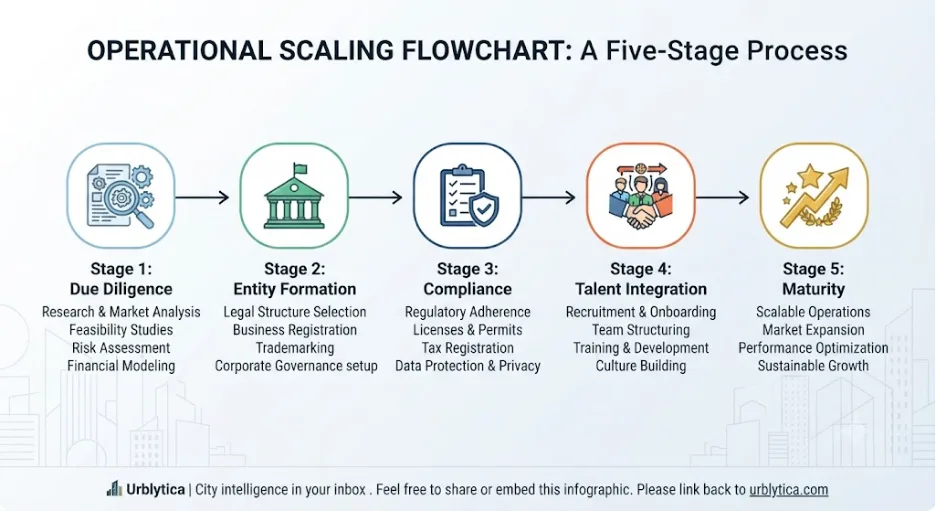
Table 2: Scaling Indicators for Modern Enterprises
|
Operational Indicator |
Performance Target |
Risk Management |
Scaling Significance |
|
Breakeven Period |
Under 24 Months |
Fixed Cost |
Capital Recovery |
|
Operating Margin |
Above 15 Percent |
Input Cost |
Efficiency Gain |
|
DebttoEquity |
Below 1.0 |
Interest Rate |
Longterm Solvency |
|
Asset Return |
Above 10 Percent |
Depreciation |
Investment Value |
|
Labor Productivity |
5 Percent Annual |
Skill Gap |
Driving Growth |
|
Supply Chain Lead |
Under 30 Days |
Geopolitical |
Protection |
|
Inventory Turnover |
Over 6 Times |
Markets |
Liquid Cash |
|
R&D Investment |
Over 5 Percent |
Stagnation |
Innovation Fuel |
Deepening the Analysis: The Role of Regulatory Stability
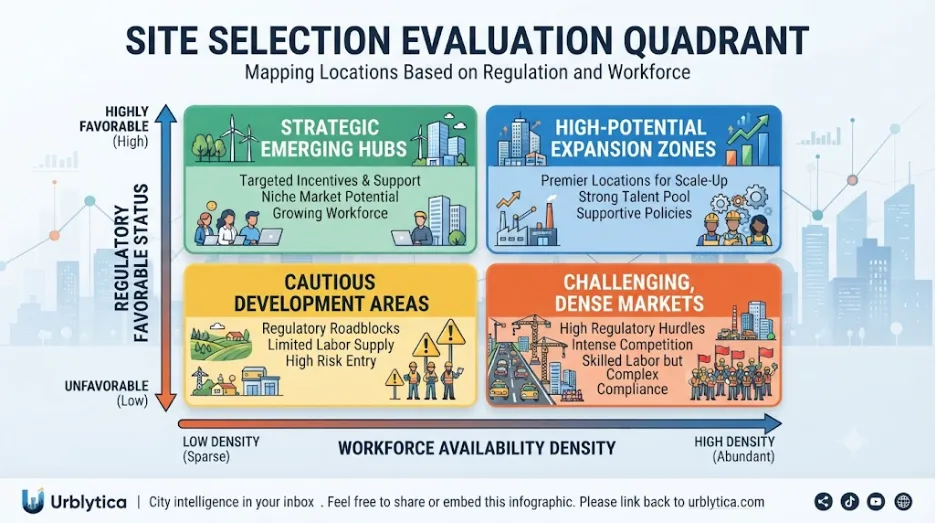
Regulatory stability is perhaps the most undervalued component of a business climate score. Investors gravitate toward markets where the rules are consistent, and the administrative path to expansion is clear. When evaluating a city, executives must consider the historical track record of local governance. Are there frequent changes to tax policy? Is the permitting process transparent? These factors, while seemingly bureaucratic, dictate the speed at which a firm can respond to changing market conditions.
In cities with a strong business climate, the local government acts as a partner rather than a hurdle. This is particularly evident in the way these cities handle infrastructure development and zoning. By proactively planning for growth, they ensure that businesses are not delayed by utility capacity issues or transit congestion. Furthermore, the commitment to transparency in the business name search and entity registration processes allows firms to enter the market with confidence, knowing their legal foundation is secure.
The Human Element: Talent Acquisition and Retention
The final, and perhaps most important, piece of the business climate puzzle is the talent itself. As firms continue to shift toward highskill industries, the ability to recruit is synonymous with the ability to grow. Cities that have successfully branded themselves as desirable places to live and work are winning the war for talent. This involves not just competitive salaries, but a vibrant social and cultural scene that appeals to the modern workforce.
Using a relocation cost calculator allows firms to understand the financial reality their employees face when moving to a new region. This level of empathy in the recruitment process helps in securing longterm loyalty from employees who are otherwise bombarded with offers from competitors. When firms view their expansion through the lens of employee wellbeing, they achieve higher retention rates and, consequently, higher productivity across their entire organization.
Addressing the Challenges of Rapid Urban Expansion
While high business climate scores are generally positive, they bring their own set of challenges, particularly regarding housing affordability and traffic congestion. Cities that are experiencing the fastest growth must manage these issues carefully to avoid diminishing the very factors that made them attractive in the first place. This requires a balanced approach to urban planning that integrates commercial development with affordable housing and efficient public transport.
For firms, this means that site selection should include a thorough analysis of local demographic trends. Using a population growth calculator allows executives to project how the local environment will look in five or ten years. If projected growth exceeds the city's ability to provide infrastructure, it may be prudent to look at satellite markets or alternative expansion strategies. Maintaining this longterm view is what separates great leaders from those who only look at the current quarter.
The Strategic Importance of Continuous Evaluation
Business environments are fluid. A city that ranks at the top today might face new challenges tomorrow. Therefore, companies must maintain a culture of continuous monitoring. This involves tracking key performance indicators not just for the business, but for the city itself. Are utility costs rising? Is the talent pool tightening? Does the regulatory environment show signs of shifting?
By maintaining this vigilance, firms can stay ahead of the curve. They can proactively shift resources, adjust their growth targets, or even explore new locations if the climate begins to turn. This is the essence of agility in the modern economy. It is not enough to make a good decision once; you must be prepared to make it again as the economic landscape changes.
Frequently Asked Questions
1. What factors contribute most to a high investment attractiveness score?
A high score is determined by regulatory stability, infrastructure robustness, talent availability, and the transparency of the tax and compliance environment.
2. Why are secondary cities often performing better than major metropolises?
Secondary cities often offer lower operational costs, less bureaucratic friction, and significant room for demographic and industrial growth.
3. How does local regulation impact the decision to start a business?
Favorable local regulations reduce the administrative burden of entry, allow for faster scaling, and provide a predictable landscape for longterm investments.
4. Is tax incentive the most important factor in site selection?
No, while tax incentives are relevant, executives prioritize longterm infrastructure stability, skilled talent pipelines, and research ecosystems.
5. How can firms maintain good standing across multiple states?
Firms should utilize a dedicated compliance calendar and ensure that all annual filings and registered agent requirements are meticulously managed.
6. What is the role of technology in modern business climate assessment?
Technology allows for realtime analysis of demographic shifts, labor market trends, and operational costs, enabling datadriven site selection.
7. How do firms calculate the return on investment for a new location?
Firms perform thorough breakeven analyses and project asset depreciation over long periods to validate capital investment against potential local revenue.
8. What is the impact of workforce training on business climate?
Cities with strong partnerships between industry and vocational institutions create a steady pipeline for skilled workers, which reduces hiring risks.
9. Why is data hygiene essential for scaling firms?
Inaccurate data in payroll, taxes, or compliance filings can cause administrative friction and legal issues that severely hinder rapid expansion.
10. How does the current demographic shift toward the Sunbelt affect business?
The influx of population to the Sunbelt increases consumer demand and provides a larger, younger labor pool, driving sustained economic growth in those regions.